
Showing posts with label FOREIGN POLICY. Show all posts
Showing posts with label FOREIGN POLICY. Show all posts
Wednesday, February 11, 2015
Why The Ukraine Peace Talks Will Cause War
By Luke Rudkowski
In this video Luke Rudkowski breaks down the latest developments with the Ukraine conflict as Obama and Merkel meet to decide on arming Ukraine. We go through a lot of information very quickly to give you the bigger picture of what happened in Ukraine, we skipped over a lot but will cover this conflict in more detail later on this channel.
Visit WeAreChange.org
Get truth delivered to your inbox every week.
Subscribe to GLOBAL POLITICAL AWAKENING by Email

Monday, August 18, 2014
What Have We Accomplished in Iraq?
 |
| Freda Art |
We have been at war with Iraq for 24 years, starting with Operations Desert Shield and Storm in 1990. Shortly after Iraq’s invasion of Kuwait that year, the propaganda machine began agitating for a US attack on Iraq. We all remember the appearance before Congress of a young Kuwaiti woman claiming that the Iraqis were ripping Kuwaiti babies from incubators. The woman turned out to be the daughter of the Kuwaiti ambassador to the US and the story was false, but it was enough to turn US opposition in favor of an attack.
This month, yet another US president – the fifth in a row – began bombing Iraq. He is also placing in US troops on the ground despite promising not to do so.
The second Iraq war in 2003 cost the US some two trillion dollars. According to estimates, more than one million deaths have occurred as a result of that war. Millions of tons of US bombs have fallen in Iraq almost steadily since 1991.
What have we accomplished? Where are we now, 24 years later? We are back where we started, at war in Iraq!
Monday, May 23, 2011

Wednesday, May 4, 2011
Saturday, April 30, 2011
Thursday, April 28, 2011
Key US lawmakers warn Palestinians of aid cuts
 |
| Palestinian security forces training in the West Bank city of Jenin © AFP Saif Dahlah |
WASHINGTON (AFP) - The United States will "reexamine" its aid to the Palestinians in the event of a power-sharing deal that includes the Islamist Hamas movement, a key US lawmaker warned Thursday.
"If a power-sharing agreement with a terrorist organization becomes a reality in the Palestinian territories, the US will be forced to reexamine our aid to the Palestinian Authority," said Republican Representative Kay Granger.
Granger, who chairs the House of Representatives subcommittee that controls US foreign aid, issued the statement through her office while on a trip to the Middle East for talks with Israeli and Egyptian officials.
Wednesday, April 6, 2011
Tuesday, April 5, 2011
The Fed Undermines Foreign Policy
 |
| Dees Illustration |
Last week I was both surprised and pleased when the Supreme Court upheld lower court decisions requiring the Federal Reserve Bank to comply with requests for information made by Bloomberg under the Freedom of Information Act ("FOIA"). Bloomberg simply wanted to know who received loans from the Fed's discount window in the aftermath of the 2008 financial market crisis, and how much each entity received. Surely this is basic information that should be available to every American taxpayer. But the Fed fought tooth and nail all the way to the Supreme Court to preserve their privileged secrecy. However, transparency and openness won the day. There are some 29,000 pages to decipher, but a few points stand out initially.
The Fed lent huge sums of our money to foreign banks. This in itself was not surprising, but the actual amount is staggering! In one week at the height of the crisis, about 70% of the money doled out went to foreign banks. We were told that bailing out banks was going to stave off a massive depression. Depression for whom? We now know that the Fed's bailout had nothing to do with helping the American people, who have gotten their depression anyway with continued job losses and foreclosures. But now we learn that a good deal of the money did not even help American banks!
Wednesday, March 16, 2011

Monday, February 21, 2011
Wednesday, December 8, 2010
Ron Paul: In a Free Society, We're Supposed to Know the Truth

Campaign For Liberty
We may never know the whole story behind the recent publication of sensitive U.S. government documents by the Wikileaks organization, but we certainly can draw some important conclusions from the reaction of so many in government and media.
At its core, the Wikileaks controversy serves as a diversion from the real issue of what our foreign policy should be. But the mainstream media, along with neoconservatives from both political parties, insist on asking the wrong question. When presented with embarrassing disclosures about U.S. spying and meddling, the policy that requires so much spying and meddling is not questioned. Instead, the media focus on how so much sensitive information could have been leaked, or how authorities might prosecute the publishers of such information.
No one questions the status quo or suggests a wholesale rethinking of our foreign policy. No one suggests that the White House or the State Department should be embarrassed that the U.S. engages in spying and meddling. The only embarrassment is that it was made public. This allows ordinary people to actually know and talk about what the government does. But state secrecy is anathema to a free society. Why exactly should Americans be prevented from knowing what their government is doing in their name?
In a free society, we are supposed to know the truth. In a society where truth becomes treason, however, we are in big trouble. The truth is that our foreign spying, meddling, and outright military intervention in the post-World War II era has made us less secure, not more. And we have lost countless lives and spent trillions of dollars for our trouble. Too often "official" government lies have provided justification for endless, illegal wars and hundreds of thousands of resulting deaths and casualties.
Take the recent hostilities in Korea as only one example. More than fifty years after the end of the Korean War, American taxpayers continue to spend billions for the U.S. military to defend a modern and wealthy South Korea. The continued presence of the U.S. military places American lives between the two factions. The U.S. presence only serves to prolong the conflict, further drain our empty treasury, and place our military at risk.
The neoconservative ethos, steeped in the teaching of Leo Strauss, cannot abide an America where individuals simply pursue their own happy, peaceful, prosperous lives. It cannot abide an America where society centers around family, religion, or civic and social institutions rather than an all powerful central state. There is always an enemy to slay, whether communist or terrorist. In the neoconservative vision, a constant state of alarm must be fostered among the people to keep them focused on something greater than themselves-- namely their great protector, the state. This is why the neoconservative reaction to the Wikileaks revelations is so predictable: "See, we told you the world was a dangerous place," goes the story. They claim we must prosecute -- or even assassinate == those responsible for publishing the leaks. And we must redouble our efforts to police the world by spying and meddling better, with no more leaks.
We should view the Wikileaks controversy in the larger context of American foreign policy. Rather than worry about the disclosure of embarrassing secrets, we should focus on our delusional foreign policy. We are kidding ourselves when we believe spying, intrigue, and outright military intervention can maintain our international status as a superpower while our domestic economy crumbles in an orgy of debt and monetary debasement.
Buy 1 Get 2 Free at Botanic Choice Buy 1 Bottle and Get 2 FREE (select items), plus Free Shipping on $25+ Expires 12/31/2010
Fresh food that lasts from eFoods Direct (Ad)
Live Superfoods
Print this page

Tuesday, October 5, 2010
U.S. Economic, Political and Military Expansion in Asia-Pacific Region
The U.S. is stepping up efforts to gain more influence in Asia-Pacific through participation in more regional institutions and negotiations on the Trans-Pacific Partnership (TPP) trade deal. U.S. foreign policy seeks to shape the future of the region in an attempt to dominate economic, political and security issues.
 | |
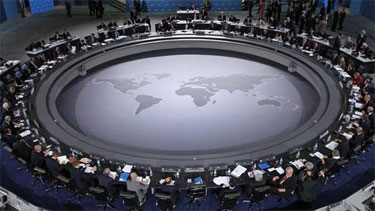 | |
| The Trans-Pacific Partnership is another building block for an integrated system of global governance managed by Western financial interests and their collaborators around the world. | |
There are concerns over the rise of trade agreements in the Asia-Pacific by U.S. competitors that could greatly affect its interests. The TPP is seen by many as a key component of America’s trade strategy for further engagement in the region. A U.S. government fact sheet describes the TPP as a, “potential platform for economic integration across the Asia Pacific region. The United States will engage with an initial group of seven like-minded countries, Singapore, Chile, New Zealand, Brunei, Australia, Peru, and Vietnam, to craft a platform for a high-standard, comprehensive agreement – one that reflects U.S. priorities and values – with these and additional Asia-Pacific partners.” The TPP is open to other countries with Canada, Malaysia and the Philippines, among some of the nations that have shown interest in joining. It has been suggested that the U.S. may want the current eight partnership countries to reach an initial high-quality agreement before bringing others into the pact. In an effort to play a more dominant role, the TPP could be a means to address long-standing U.S. economic interests in Asia and be used to counter increasing Chinese trade in the region.
In his article Obama Pledges U.S. Entry Into Pacific Trade Deal, Jim Capo characterized the true nature of the TPP and just how it relates to a world government system. He concluded that, “The Trans-Pacific Partnership Agreement is the sister agreement to the Trans-Atlantic Agenda. Together with NAFTA and the North American Leaders Summit (new name for the discredited SPP), these deals are building blocks for an integrated system of global governance managed by Western financial interests and their collaborators around the world.” Some remain hopeful that the TPP will be the beginning of a new U.S. trade model, but there are fears that it could be another NAFTA. A recent open letter to U.S. Trade Representative Ron Kirk signed by a number of activist groups is asking that any negotiated TPP restrict intellectual property provisions. In addition, they are urging that accession or adherence to the Anti-Counterfeiting Trade Agreement (ACTA) not be a requirement of the deal. If things are to change, the TPP will also need to include strong environmental and labour protections and exclude harmful NAFTA invest-to-state lawsuit provisions, as well as financial service deregulation.
In June, the second round of negotiations for the TPP were held in San Francisco. Significant progress was made as discussions examined goals for improving and expanding the partnership. This includes clarifying, “the relationship between existing FTAs and the TPP by agreeing member economies would continue current FTA requirements while adhering to any higher TPP standards. That determination lays the foundation for how TPP economies will precede in future negotiations.” Working groups also addressed a wide range of topics such as agricultural products, business mobility, cross-border services, intellectual property protection, financial services and technical barriers to trade, along with other issues. The next round of talks are scheduled to take place from October 4-9 in Brunei. Since the Obama administration recommitted to the TPP last year, negotiations have gained momentum and an agreement could be signed in 2012. Although the TPP is not technically part of the Asia-Pacific Economic Cooperation (APEC), it is seen as the potential foundation for creating one of its goals of a region-wide free trade area.
In November 2011, APEC leaders will gather in Hawaii where the U.S. could plot a bolder vision for the forum. According to a Statement by the Press Secretary, “The United States will use the opportunity of chairing APEC in 2011 to highlight the vast potential the Asia-Pacific region holds for American companies and workers, to help shape the future of Asia-Pacific’s regional architecture, and to promote APEC’s core mission of spurring mutually beneficial regional economic integration.” This year’s APEC Leaders summit will take place in Yokohama, Japan this November. The Meeting of APEC Ministers Responsible for Trade which was held several months back, commended the work that had been undertaken in key areas of regional economic integration. This includes sectors such as standards and technical regulations, investment, trade facilitation, rules of origin, intellectual property rights, as well as environmental goods and services. They also welcomed progress made to explore possible pathways to achieve a Free Trade Area of the Asia-Pacific.
Earlier this year, Kurt M. Campbell Assistant Secretary, Bureau of East Asian and Pacific Affairs made it clear that the U.S. seeks to play a more prominent role in the region. In a Statement on Regional Overview of East Asia and the Pacific he emphasized, “In every regard – geopolitically, militarily, diplomatically, and economically – Asia and the Pacific are indispensable to addressing the challenges and seizing the opportunities of the 21st century. As the Asia-Pacific century emerges, defining the new international environment, the United States must enhance and deepen its strategic engagement and leadership role in the region.” Secretary of State Hillary Rodham Clinton’s recent Remarks on U.S. Foreign Policy before the Council on Foreign Relations also lays out America’s strategy. She stated, “the Asia-Pacific currently has few robust institutions to foster effective cooperation and reduce the friction of competition, so we began building a more coherent regional architecture with the United States deeply involved.” Clinton also added, “the Asia-Pacific region will grow in importance and developing these institutions will establish habits of cooperation that will be vital to stability and prosperity.”
The Association of Southeast Asian Nations (ASEAN) has become one of the main vehicles for integration in the region. In a Statement By President Obama at the Opening Of the U.S.-ASEAN Leaders Meeting which took place in New York on September 24, he acknowledged that, “Through APEC and initiatives like the Trans-Pacific Partnership, we’re pursuing trade relationships that benefit all our countries. And we will continue to support ASEAN’s goal of creating a more effective and integrated community by 2015.” He went on to say, “We’ll also focus on deepening our political and security cooperation.” ASEAN has become a dominant group and is poised to play a crucial role in the vision for an Asia-Pacific Union. Further engagement in regards to evolving regional architecture is really the struggle for more influence. Gaining more control in Asia-Pacific is important from a geopolitical, economic and military standpoint. As it continues to grow, the U.S. seeks to play an active role in shaping the region.
During a trip to Asia last year, Obama proclaimed himself to be America’s first Pacific President and noted the importance of, “multilateral organizations (that) can advance the security and prosperity of this region.” He also asserted, “As an Asia Pacific nation, the United States expects to be involved in the discussions that shape the future of this region, and to participate fully in appropriate organizations as they are established and evolve.” American economic, political and military expansion in Asia-Pacific is being used to counter growing Chinese influence. The U.S. continues to strengthen old alliances and forge new partnerships. Through various joint security exercises, it has increased its military presence in the area. With the U.S. and China vying for more control, this could further escalate tensions and lead to a potential confrontation between the two powers.
Dana Gabriel is an activist and independent researcher. He writes about trade, globalization, sovereignty, as well as other issues.
Contact: beyourownleader@hotmail.com
Fresh food that lasts from eFoods Direct (Ad)
Live Superfoods
Print this page
Sunday, September 26, 2010
Rothschild and CIA Publications Attack “Constitution-worshipers”
Kurt Nimmo
Infowars.com
September 25, 2010
Infowars.com
September 25, 2010
The editors of the Economist have declared constitutionalists mentally ill. “Indeed, there is something infantile in the belief of the constitution-worshipers that the complex political arguments of today can be settled by simple fidelity to a document written in the 18th century,” the editors wrote on September 23. “When history is turned into scripture and men into deities, truth is the victim.”
| |
 | |
| Following the Constitution is infantile behavior, according to two publications produced by the Rothschilds, the CFR, and the CIA. | |
The Economist is owned by members of the Rothschild banking family of England. It is run by the Economist Group, a known CIA front.
According to the Economist, the framers were aristocrats who “did not believe that poor men, or any women, let alone slaves, should have the vote.” The Constitution does not address the “hard questions thrown up by modern politics,” namely should gays be allowed to marry?
The Economist argument against the Constitution is the same one used by liberal academics. The document is antiquated, the product of a bygone era. The founders were afraid of “democracy taking hold,” so they crafted a document designed to exclude the common people and preserve their aristocratic position.
Globalists love democracy. It is an easy enough task to fool the people, especially these days with 24-7 media and satellite television. It is a relatively simple matter to have the benighted masses vote away their natural rights under some cooked up false pretense. “Democracy is not freedom. Democracy is two wolves and a lamb voting on what to eat for lunch. Freedom comes from the recognition of certain rights which may not be taken, not even by a 99% vote,” wrote Marvin Simkin. Liberty is a well-armed lamb contesting the vote.
Soon after the Economist article appeared, the establishment publication Foreign Policy posted an article slamming the idea that we should follow the Constitution. Joshua Keating writes that he suspects “most Americans don’t realize quite how old the Constitution is by world standards,” that is to say globalist standards. In order to make his point, Keating cites an article published in the Onion, a popular satire publication.
Foreign Policy was established by the Carnegie Endowment for International Peace, a think tank created by the “internationalist” Andrew Carnegie, who took his advice from Elihu Root, who worked to make the Council On Foreign Relations possible.
As Carroll Quigley noted in Tragedy and Hope: A History of the World in Our Time , the CFR, modeled on the British Round Table Group, “penetrated deeply into university life, the press, and… foreign policy,” and peddled its globalist influence through five American newspapers, including the Washington Post and the New York Times. “The CFR is the American Branch of a society which originated in England, and which believes that national boundaries should be obliterated, and a one-world rule established,” Quigley explains.
, the CFR, modeled on the British Round Table Group, “penetrated deeply into university life, the press, and… foreign policy,” and peddled its globalist influence through five American newspapers, including the Washington Post and the New York Times. “The CFR is the American Branch of a society which originated in England, and which believes that national boundaries should be obliterated, and a one-world rule established,” Quigley explains.In 2008, Foreign Policy was bought by the Washington Post Company. The Washington Post is the crown jewel of the CIA’s Operation Mockingbird. Wall Street lawyer Frank Wisner, who ran the Office of Special Projects — later to become part of the CIA — recruited Philip Graham, the publisher of the Washington Post, to run Operation Mockingbird and subvert the free press in the United States.
The CFR wants “to bring about the surrender of the sovereignty of the national independence of the United States,” Admiral Chester Ward, a former member of the CFR, warned. In order to realize their one-world government scheme, the CFR and the ruling elite must undermine the sovereignty of the United States.
It must also undermine and subvert the Tea Party movement and the popular move to restore the constitutional foundation of the country.
The twin articles appearing in the Economist — at the behest of Rothschild and the City of London banking elite — and Foreign Policy — controlled by the Council On Foreign Relations — are designed to make constitutionalists appear to be not only infantile idealists who idolize an archaic document that the globalists argue has no relevance in our modern era of gay marriage, but also as dangerous people who suffer from mental illness.
–
Kurt Nimmo edits Infowars.com. He is the author of Another Day in the Empire: Life In Neoconservative America .
.
.Fresh food that lasts from eFoods Direct (Ad)
Live Superfoods
Print this page
Subscribe to:
Posts (Atom)