Translate

GPA Store: Featured Products

Showing posts with label ASIA-PACIFIC. Show all posts

Sunday, November 28, 2010

International calls for calm after North Korea fires barrage at South Korean island

guardian.co.uk

China, Japan and Germany express their concern about Pyongyang's attack on the island of Yeonpyeong, and call on both parties to resolve their differences peacefully


Fresh food that lasts from eFoods Direct (Ad)

Live Superfoods It is time to Wake Up! You too, can join the "Global Political Awakening"!

Print this page

PureWaterFreedom

Tuesday, November 23, 2010

Ron Paul: Korea Conflict May Be Orchestrated Crisis To Boost Dollar

Paul Joseph Watson
Infowars.com
November 23, 2010
Congressman Ron Paul speculated on the Alex Jones Show today that the war footing between North and South Korea could be an orchestrated crisis to boost the dollar and reverse the US economy, paralleling the RAND Corporation’s call two years ago for the United States to become embroiled in a major war as a means of preventing a double dip recession.
South Korea admitted that it fired the first shots prompting a North Korean retaliation that killed two South Korean Marines and set ablaze many homes on the Yellow Sea border island of Yeonpyeong.
Tensions are running dangerously high after North Korea’s military vowed a “merciless military strike” and South Korean President Lee Myung-bak ordered his military to strike North Korea’s missile base around its coastline artillery positions if the North made any further moves. Japan announced that it was preparing for “any eventuality” while Russia said the events represented a “colossal danger” to peace in the region.
Stock markets sank worldwide while the dollar and gold bullion rallied in response to the news.
Speaking to the Alex Jones Show, Congressman Paul said it was frightening that people in the Obama administration were advocating war as a means of escaping the economic crisis, saying that North Korea stood no chance whatsoever of successfully defeating South Korea in any conflict.
Paul speculated that the US military-industrial complex was, “Doing it deliberately, and sort of orchestrating this in order to have the military-industrial complex benefit and the dollar temporarily benefit.”
As we highlighted two years ago when the story first broke, the RAND Corporation has been aggressively lobbying the Pentagon to become embroiled in a major new war to jump-start a recovery of the US economy and boost profits for the military-industrial complex after the scaling down of the wars in Iraq and Afghanistan.
Chinese media sources reported that RAND had presented a proposal to the Pentagon that revolved around fostering a conflict with a major foreign power in order to stimulate the American economy and prevent a double dip recession.
Although at the time RAND considered North Korea on its own to be too small a target, any full scale confrontation between the Koreas would embroil the United States on the side of the South and China on the side of the North. If North Korea were to tap its arsenal of nuclear weapons, the entire international community would quickly rubber stamp a US-led military assault on the rogue nation.
Given the fact that North Korea’s nuclear belligerency has its foundations in the best efforts of people like Donald Rumsfeld and the Bush administration, through the AQ Khan weapons trading network, to provide Communist agitator Kim Jong-Il and his hereditary successor with nuclear weapons, the fact that we are now seeing tensions reach boiling point represents a huge opportunity for the US military-industrial complex to manipulate into being the massive war that they have been seeking for years.
—
Paul Joseph Watson is the editor and writer for Prison Planet.com. He is the author of Order Out Of Chaos. Watson is also a fill-in host for The Alex Jones Show. Watson has been interviewed by many publications and radio shows, including Vanity Fair and Coast to Coast AM, America’s most listened to late night talk show.


Fresh food that lasts from eFoods Direct (Ad)

Live Superfoods It is time to Wake Up! You too, can join the "Global Political Awakening"!

Print this page

PureWaterFreedom

North Korea Attack Part Of RAND Plan For Total War?

Paul Joseph Watson
Infowars.com
November 23, 2010
The exchange of artillery fire between North and South Korea, which the North says was started by South Korea firing shells during a military drill, could act as the catalyst for a huge new conflict that the RAND Corporation has been lobbying for over the past two years.
The clash, which took place on the Yellow Sea border island of Yeonpyeong, killed two South Korean soldiers and wounded 18 others. North Korea has reportedly fired some 200 shells, setting numerous buildings on fire on the island. Both countries have elevated their threat status and are preparing for potential full out warfare.
As we warned two years ago, the military-industrial complex has been yearning for a new conflict since the invasion of Iraq some seven and a half years ago.
Back in October 2008, we reported on how the RAND Corporation was lobbying for a war to be started with a major foreign power in order to stimulate the American economy and prevent a double dip recession.
The RAND Corporation is a notoriously powerful NGO with deep ties to the U.S. military-industrial complex as well as interlocking connections with the Ford, Rockefeller, and Carnegie foundations.
The RAND proposal, which was reported on by Chinese media sources, brazenly urged that a new war could be launched to benefit the economy, but stressed that the target country would have to be a major influential power, and not a smaller country on the scale of Afghanistan or Iraq.
Although at the time RAND considered North Korea on its own to be too small a target, any full scale confrontation between the Koreas would embroil the United States on the side of the South and China on the side of the North. If North Korea were to tap its arsenal of nuclear weapons, the entire international community would quickly rubber stamp a US-led military assault on the rogue nation.
Given the fact that North Korea’s nuclear belligerency has its foundations in the best efforts of people like Donald Rumsfeld and the Bush administration, through the AQ Khan weapons trading network, to provide Communist agitator Kim Jong-Il and his hereditary successor with nuclear weapons, the fact that we are now seeing tensions reach boiling point represents a huge opportunity for the US military-industrial complex to manipulate into being the massive war that they have been seeking for years.
—
Paul Joseph Watson is the editor and writer for Prison Planet.com. He is the author of Order Out Of Chaos. Watson is also a fill-in host for The Alex Jones Show. Watson has been interviewed by many publications and radio shows, including Vanity Fair and Coast to Coast AM, America’s most listened to late night talk show.


Fresh food that lasts from eFoods Direct (Ad)

Live Superfoods It is time to Wake Up! You too, can join the "Global Political Awakening"!

Print this page

PureWaterFreedom

Korean War Crisis: Brought To You By Uncle Sam

Paul Joseph Watson
Infowars.com
November 23, 2010
Despite the fact that South Korea admits it fired the first shots that prompted the North to retaliate, the vast majority of the establishment press are feverishly blaming North Korea for a new escalation in the crisis, while failing completely to acknowledge the fact that the whole fiasco was generated as a direct result of Uncle Sam’s policy through two separate administrations to ensure hereditary dictator Kim Jong-Il and his successors acquired the atom bomb.
As we have exhaustively documented, North Korea’s nuclear belligerency was almost exclusively a creation of the U.S. government in that they armed the Stalinist state both directly and indirectly through global arms dealers under their control, namely Dr. Abdul Qadeer Khan. While labeling North Korea as part of the “axis of evil,” the U.S. government was enthusiastically funding its nuclear weapons program at every stage.
Both the Clinton and Bush administrations played a key role in helping Kim Jong-Il develop North Korea’s nuclear prowess from the mid 1990’s onwards.
Just as with Saddam Hussein’s chemical and biological weapons program, it was Donald Rumsfeld who played a key role in arming Kim-Jong-Il.
Rumsfeld was man who presided over a $200 million dollar contract to deliver equipment and services to build two light water reactor stations in North Korea in January 2000 when he was an executive director of ABB (Asea Brown Boveri). Wolfram Eberhardt, a spokesman for ABB confirmed that Rumsfeld was at nearly all the board meetings during his involvement with the company.
Rumsfeld was merely picking up the baton from the Clinton administration, who in 1994 agreed to replace North Korea’s domestically built nuclear reactors with light water nuclear reactors. So-called government-funded ‘experts’ claimed that light water reactors couldn’t be used to make bombs. Not so according to Henry Sokolski, head of the Non-proliferation Policy Education Center in Washington, who stated, “LWRs could be used to produce dozens of bombs’ worth of weapons-grade plutonium in both North Korea and Iran. This is true of all LWRs — a depressing fact U.S. policymakers have managed to block out.”
“These reactors are like all reactors, they have the potential to make weapons. So you might end up supplying the worst nuclear violator with the means to acquire the very weapons we’re trying to prevent it acquiring,” said Sokolski.
The U.S. State Department claimed that the light water reactors could not be used to produce bomb grade material and yet in 2002 urged Russia to end its nuclear co-operation with Iran for the reason that it didn’t want Iran armed with weapons of mass destruction. At the time, Russia was building light water reactors in Iran.  According to the State Department, light water reactors in Iran can produce nuclear material but somehow the same rule doesn’t apply in North Korea.
In April 2002, the Bush administration announced that it would release $95 million of American taxpayer’s dollars to begin construction of the ‘harmless’ light water reactors in North Korea. Bush argued that arming the megalomaniac dictator Kim Jong-Il with the potential to produce a hundred nukes a year was, “vital to the national security interests of the United States.” Bush released even more money in January 2003, as was reported byBloomberg News.
Bush released the funds despite the startling revelation, reported by South Korean newspapers, that a North Korean missile warhead had been found in Alaska.
Construction of the reactors was eventually suspended, but North Korea had an alternative source through which they could obtain the nuclear secrets vital to building an atom bomb arsenal – CIA asset and international arms smuggler AQ Khan.
In 2004, Dr. Abdul Qadeer Khan, the father of Pakistan’s atom bomb program, admitted sharing nuclear technology via a worldwide smuggling network that included facilities in Malaysia that manufactured key parts for centrifuges.
Khan’s collaborator B.S.A. Tahir ran a front company out of Dubai that shipped centrifuge components to North Korea.
Despite Dutch authorities being deeply suspicious of Khan’s activities as far back as 1975, the CIA prevented them from arresting him on two occasions.
“The man was followed for almost ten years and obviously he was a serious problem. But again I was told that the secret services could handle it more effectively,” former Dutch Prime Minister Ruud Lubbers said. “The Hague did not have the final say in the matter. Washington did.”
Lubbers stated that Khan was allowed to slip in and out of the Netherlands with the blessing of the CIA, eventually allowing him to become the “primary salesman of an extensive international network for the proliferation of nuclear technology and know-how,” according to George W. Bush himself, and sell nuclear secrets that allowed North Korea to build nuclear bombs.
“Lubbers suspects that Washington allowed Khan’s activities because Pakistan was a key ally in the fight against the Soviets,” reports CFP. “At the time, the US government funded and armed mujahideen such as Osama bin Laden. They were trained by Pakistani intelligence to fight Soviet troops in Afghanistan. Anwar Iqbal, Washington correspondent for the Pakistani newspaper Dawn, told ISN Security Watch that Lubbers’ assertions may be correct. “This was part of a long-term foolish strategy. The US knew Pakistan was developing nuclear weapons but couldn’t care less because it was not going to be used against them. It was a deterrent against India and possibly the Soviets.”
In September 2005 it emerged that the Amsterdam court which sentenced Khan to four years imprisonment in 1983 had lost the legal files pertaining to the case. The court’s vice-president, Judge Anita Leeser, accused the CIA of stealing the files. “Something is not right, we just don’t lose things like that,” she told Dutch news show NOVA. “I find it bewildering that people lose files with a political goal, especially if it is on request of the CIA. It is unheard of.”
In 2005, Pakistani President Pervez Musharaf acknowledged that Khan had provided centrifuges and their designs to North Korea.
Through their policies in aiding North Korea to build light water reactors, and via the CIA asset AQ Khan who was protected at every step of the way while he helped provide North Korea with the means to build a nuclear arsenal, the U.S. government itself is directly complicit in providing North Korean dictator Kim Jong-Il with the nuclear weapons he now threatens to use against U.S. ally South Korea.
North Korea is controlled by a hereditary Stalinist dictatorship that has starved two million of its citizens to death in favor of building a million-man army. Some people put the figure at four million, one-quarter of the population. In the far north of the country there is a network of forced labor gulags where people who have ‘expressed a bland political opinion’ are, along with their entire families, tortured, raped and executed. Horrific bio-chemical experiments are performed on mass numbers of people. Babies are delivered and then stamped to death by the camp guards. If the mother screams while the guards are stamping on the baby’s neck, she is immediately assassinated by a firing squad. These guards are rewarded with bonuses and promotions for ripping out prisoners’ eyeballs.
The North Korean people are enslaved by a government that is using food as a weapon. Perhaps this is why the EU and the United States, via the UN World Food Program, resumed the shipment of hundreds of thousands of tons in food aid at the end of February 2003. This goes directly to the sitting dictatorship, which then decides who gets it by their level of allegiance to the state. Food aid only increases the power of Kim Jong-Il and yet it is veiled by the UN in bleeding heart humanitarian rhetoric. The money goes straight to enabling the North Korean leadership to live in the lap of westernized luxury with casinos and lavish new cars.
President Bush publicly claimed to loathe Kim Jong-Il and yet his administration, like Bill Clinton before him, set the policy to help North Korea obtain nuclear expertise. The U.S. intelligence network also protected AQ Khan and allowed him to provide the means with which North Korea acquired their nuclear capability.
If the tensions between the Koreas were to escalate into all out war, don’t expect the castrated American corporate media to mention how Kim Jong-Il and his successors grew to be such a threat in the first place – with the aid of nuclear weapons enthusiastically supplied by the U.S. government and its surrogates.
—
Paul Joseph Watson is the editor and writer for Prison Planet.com. He is the author of Order Out Of Chaos. Watson is also a fill-in host for The Alex Jones Show. Watson has been interviewed by many publications and radio shows, including Vanity Fair and Coast to Coast AM, America’s most listened to late night talk show.


Fresh food that lasts from eFoods Direct (Ad)

Live Superfoods It is time to Wake Up! You too, can join the "Global Political Awakening"!

Print this page

PureWaterFreedom

Friday, November 12, 2010

Wayne Madsen: China Fired Missile Seen In Southern California

Wayne Madsen Report


Pentagon and its embedded media covering up Chinese show of force off LA

China flexed its military muscle Monday evening in the skies west of Los Angeles when a Chinese Navy Jin class ballistic missile nuclear submarine, deployed secretly from its underground home base on the south coast of Hainan island, launched an intercontinental ballistic missile from international waters off the southern California coast. WMR’s intelligence sources in Asia, including Japan, say the belief by the military commands in Asia and the intelligence services is that the Chinese decided to demonstrate to the United States its capabilities on the eve of the G-20 Summit in Seoul and the Asia-Pacific Economic Cooperation summit in Tokyo, where President Obama is scheduled to attend during his ten-day trip to Asia.
The reported Chinese missile test off Los Angeles came as a double blow to Obama. The day after the missile firing, China’s leading credit rating agency, Dagong Global Credit Rating, downgraded sovereign debt rating of the United States to A-plus from AA. The missile demonstration coupled with the downgrading of the United States financial grade represents a military and financial show of force by Beijing to Washington.
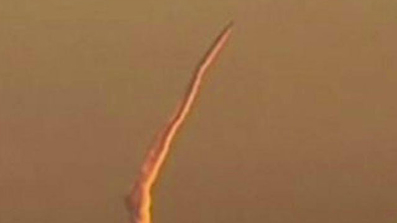
The Pentagon spin machine, backed by the media reporters who regularly cover the Defense Department, as well as officials of the Federal Aviation Administration (FAA), North American Aerospace Defense Command (NORAD), and the U.S. Northern Command, is now spinning various conspiracy theories, including describing the missile plume videotaped by KCBS news helicopter cameraman Gil Leyvas at around 5:00 pm Pacific Standard Time, during the height of evening rush hour, as the condensation trail from a jet aircraft. Other Pentagon-inspired cover stories are that the missile was actually an amateur rocket or an optical illusion.
Experts agree that this was a ballistic missile being fired off of Los Angeles. Pentagon insists it was a jet aircraft or model rocket.
There are no records of a plane in the area having taken off from Los Angeles International Airport or from  other airports in the region. The Navy and Air Force have said that they were not conducting any missile tests from submarines, ships, or Vandenberg Air Force Base. The Navy has also ruled out an accidental firing from one of its own submarines.
Missile experts, including those from Jane’s in London, say the plume was definitely from a missile, possibly launched from a submarine. WMR has learned that the missile was likely a  JL-2 ICBM, which has a range of 7,000 miles, and was fired in a northwesterly direction over the Pacific and away from U.S. territory from a Jin class submarine. The Jin class can carry up to twelve such missiles.
Navy sources have revealed that the missile may have impacted on Chinese territory and that the National Security Agency (NSA) likely posseses intercepts of Chinese telemtry signals during the missile firing and subsequent testing operations.
Japanese and other Asian intelligence agencies believe that a Chinese Jin-class SSBN submarine conducted missile “show of force” in skies west of Los Angeles.
Asian intelligence sources believe the submarine transited from its base on Hainan through South Pacific waters, where U.S. anti-submarine warfare detection capabilities are not as effective as they are in the northern and mid-Pacific, and then transited north to waters off of Los Angeles. The Pentagon, which has spent billions on ballistic missile defense systems, a pet project of former Defense Secretary Donald Rumsfeld, is clearly embarrassed over the Chinese show of strength.
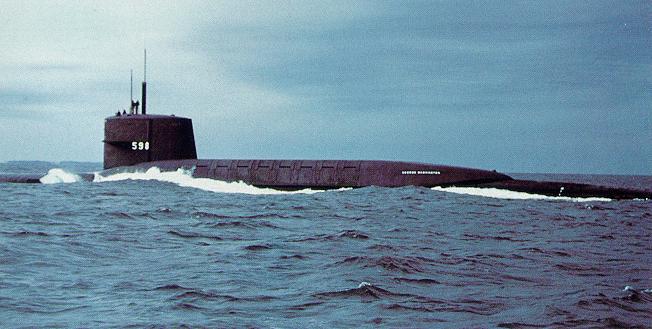
Likely route of Jin-class submarine from Hainan base.
The White House also wants to donwplay the missile story before Presidnet Obama meets with his Chinese counterpart in Seoul and Tokyo. According to Japanese intelligence sources, Beijing has been angry over United States and allied naval exercises in the South China and Yellow Seas, in what China considers its sphere of influence, and the missile firing within the view of people in Southern California was a demonstration that China’s navy can also play in waters off the American coast.
For the U.S. Navy, the Chinese show of force is a huge embarassment, especially for the Navy’s Pacific Command in Pearl Harbor, where Japan’s December 7, 1941 attack on the fleet at Pearl Harbor remains a sore subject.
In 2002, national security adviser Condoleezza Rice reportedly scolded visiting Chinese General Xiong Guankai, the deputy chief of staff for intelligence of the People’s Liberation Army, for remarks he allegedly made in 1995 that China would use nuclear weapons on Los Angeles. Xiong denied he made any such comments but the “spin” on the story helped convince Congress to sink billions of additional dollars into  ballistic missile defense, sometimes referred to at “Star Wars II.”


Fresh food that lasts from eFoods Direct (Ad)

Live Superfoods It is time to Wake Up! You too, can join the "Global Political Awakening"!

Print this page
PureWaterFreedom

Tuesday, October 5, 2010

U.S. Economic, Political and Military Expansion in Asia-Pacific Region

Dana Gabriel
Be Your Own Leader
October 5, 2010
The U.S. is stepping up efforts to gain more influence in Asia-Pacific through participation in more regional institutions and negotiations on the Trans-Pacific Partnership (TPP) trade deal. U.S. foreign policy seeks to shape the future of the region in an attempt to dominate economic, political and security issues.
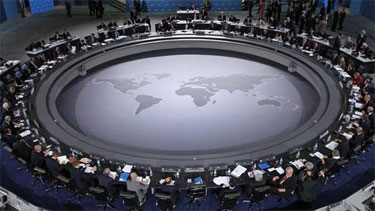
globalgov.jpg
The Trans-Pacific Partnership is another building block for an integrated system of global governance managed by Western financial interests and their collaborators around the world.
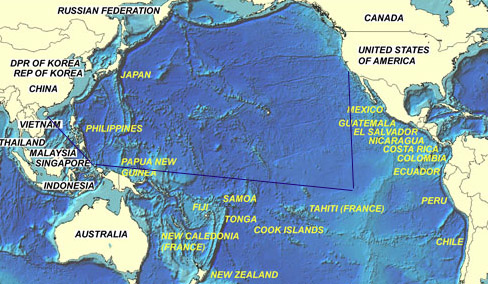
There are concerns over the rise of trade agreements in the Asia-Pacific by U.S. competitors that could greatly affect its interests. The TPP is seen by many as a key component of America’s trade strategy for further engagement in the region. A U.S. government fact sheet describes the TPP as a, “potential platform for economic integration across the Asia Pacific region. The United States will engage with an initial group of seven like-minded countries, Singapore, Chile, New Zealand, Brunei, Australia, Peru, and Vietnam, to craft a platform for a high-standard, comprehensive agreement – one that reflects U.S. priorities and values – with these and additional Asia-Pacific partners.” The TPP is open to other countries with Canada, Malaysia and the Philippines, among some of the nations that have shown interest in joining. It has been suggested that the U.S. may want the current eight partnership countries to reach an initial high-quality agreement before bringing others into the pact. In an effort to play a more dominant role, the TPP could be a means to address long-standing U.S. economic interests in Asia and be used to counter increasing Chinese trade in the region.
In his article Obama Pledges U.S. Entry Into Pacific Trade Deal, Jim Capo characterized the true nature of the TPP and just how it relates to a world government system. He concluded that, “The Trans-Pacific Partnership Agreement is the sister agreement to the Trans-Atlantic Agenda. Together with NAFTA and the North American Leaders Summit (new name for the discredited SPP), these deals are building blocks for an integrated system of global governance managed by Western financial interests and their collaborators around the world.” Some remain hopeful that the TPP will be the beginning of a new U.S. trade model, but there are fears that it could be another NAFTA. A recent open letter to U.S. Trade Representative Ron Kirk signed by a number of activist groups is asking that any negotiated TPP restrict intellectual property provisions. In addition, they are urging that accession or adherence to the Anti-Counterfeiting Trade Agreement (ACTA) not be a requirement of the deal. If things are to change, the TPP will also need to include strong environmental and labour protections and exclude harmful NAFTA invest-to-state lawsuit provisions, as well as financial service deregulation.
In June, the second round of negotiations for the TPP were held in San Francisco. Significant progress was made as discussions examined goals for improving and expanding the partnership. This includes clarifying, “the relationship between existing FTAs and the TPP by agreeing member economies would continue current FTA requirements while adhering to any higher TPP standards. That determination lays the foundation for how TPP economies will precede in future negotiations.” Working groups also addressed a wide range of topics such as agricultural products, business mobility, cross-border services, intellectual property protection, financial services and technical barriers to trade, along with other issues. The next round of talks are scheduled to take place from October 4-9 in Brunei. Since the Obama administration recommitted to the TPP last year, negotiations have gained momentum and an agreement could be signed in 2012. Although the TPP is not technically part of the Asia-Pacific Economic Cooperation (APEC), it is seen as the potential foundation for creating one of its goals of a region-wide free trade area.
In November 2011, APEC leaders will gather in Hawaii where the U.S. could plot a bolder vision for the forum. According to a Statement by the Press Secretary, “The United States will use the opportunity of chairing APEC in 2011 to highlight the vast potential the Asia-Pacific region holds for American companies and workers, to help shape the future of Asia-Pacific’s regional architecture, and to promote APEC’s core mission of spurring mutually beneficial regional economic integration.” This year’s APEC Leaders summit will take place in Yokohama, Japan this November. The Meeting of APEC Ministers Responsible for Trade which was held several months back, commended the work that had been undertaken in key areas of regional economic integration. This includes sectors such as standards and technical regulations, investment, trade facilitation, rules of origin, intellectual property rights, as well as environmental goods and services. They also welcomed progress made to explore possible pathways to achieve a Free Trade Area of the Asia-Pacific.
Earlier this year, Kurt M. Campbell Assistant Secretary, Bureau of East Asian and Pacific Affairs made it clear that the U.S. seeks to play a more prominent role in the region. In a Statement on Regional Overview of East Asia and the Pacific he emphasized, “In every regard – geopolitically, militarily, diplomatically, and economically – Asia and the Pacific are indispensable to addressing the challenges and seizing the opportunities of the 21st century. As the Asia-Pacific century emerges, defining the new international environment, the United States must enhance and deepen its strategic engagement and leadership role in the region.” Secretary of State Hillary Rodham Clinton’s recent Remarks on U.S. Foreign Policy before the Council on Foreign Relations also lays out America’s strategy. She stated, “the Asia-Pacific currently has few robust institutions to foster effective cooperation and reduce the friction of competition, so we began building a more coherent regional architecture with the United States deeply involved.” Clinton also added, “the Asia-Pacific region will grow in importance and developing these institutions will establish habits of cooperation that will be vital to stability and prosperity.”
The Association of Southeast Asian Nations (ASEAN) has become one of the main vehicles for integration in the region. In a Statement By President Obama at the Opening Of the U.S.-ASEAN Leaders Meeting which took place in New York on September 24, he acknowledged that, “Through APEC and initiatives like the Trans-Pacific Partnership, we’re pursuing trade relationships that benefit all our countries. And we will continue to support ASEAN’s goal of creating a more effective and integrated community by 2015.” He went on to say, “We’ll also focus on deepening our political and security cooperation.” ASEAN has become a dominant group and is poised to play a crucial role in the vision for an Asia-Pacific Union. Further engagement in regards to evolving regional architecture is really the struggle for more influence. Gaining more control in Asia-Pacific is important from a geopolitical, economic and military standpoint. As it continues to grow, the U.S. seeks to play an active role in shaping the region.
During a trip to Asia last year, Obama proclaimed himself to be America’s first Pacific President and noted the importance of, “multilateral organizations (that) can advance the security and prosperity of this region.” He also asserted, “As an Asia Pacific nation, the United States expects to be involved in the discussions that shape the future of this region, and to participate fully in appropriate organizations as they are established and evolve.” American economic, political and military expansion in Asia-Pacific is being used to counter growing Chinese influence. The U.S. continues to strengthen old alliances and forge new partnerships. Through various joint security exercises, it has increased its military presence in the area. With the U.S. and China vying for more control, this could further escalate tensions and lead to a potential confrontation between the two powers.
Dana Gabriel is an activist and independent researcher. He writes about trade, globalization, sovereignty, as well as other issues.
Contact: beyourownleader@hotmail.com


Fresh food that lasts from eFoods Direct (Ad)

Live Superfoods It is time to Wake Up! You too, can join the "Global Political Awakening"!

Print this page
Are you ready to evacuate?
Jasper Roberts Consulting - Widget