
Showing posts with label SMALL FARMERS. Show all posts
Showing posts with label SMALL FARMERS. Show all posts
Thursday, August 7, 2014
Neil Young: Chemical Factory Farming Threatens the "Garden of the World"
Heather Callaghan
While people have been torn over beloved astrophysicist Neil deGrasse Tyson's recent comments on genetically modified organisms, another beloved Neil took a stand - largely unnoticed.
While Tyson claims he never took a side, he still holds that genetic engineering is no different than what we've been doing for tens of thousands of years. One gets the impression from his view that corporatism and science become one for survival - despite negative consequences - and anyone who objects can go back to...being backward? Neil Young took an entirely different point-of-view, putting himself in the boots of that oft-forgotten group that gets left holding the bag in this mix: the farmer! Did his speech inspire them? Not at first...
Did he really suggest that Monsanto, the chemical conglomerates, industrialists and the big bankers are responsible for...? His argument below is unique, to say the least.

Wednesday, July 30, 2014
Food Forward: New PBS Series Explores 'Food Rebel' Innovation
 Heather Callaghan
The food freedom bug has turned heads at PBS. Food Forward TV is an upcoming series that basically showcases people striving to dramatically transform the way we eat in the United States. "Food rebels" and outliers, so to speak.
Across 50 cities, it showcases farmers, chefs, scientists, fishermen and ranchers with ways that deviate from the "conventional" large agricultural and food system. Some of their methods emulate traditional farming - which only seem unique to newer generations - but most are new, innovative solutions to feed the world.
Will the world pay attention?
Food Forward TV comes to PBS in September - watch the preview below.
The featured pioneers are safely upping nutrition for humans, animals and the soil and eliminating losses through exorbitant waste by utilizing the ecology of the whole farm instead of large-scale compartmentalization. You may recognize some faces - one of them is Mark McAfee of Organic Pastures Dairy who has taken on the FDA for its aggression toward small, fresh milk farmers and its adamant ban on interstate sales.
The makers of the program wish to emphasize that they not affiliated in any way with a Los Angeles outreach of the same name. See more footage of the PBS series HERE.
Heather Callaghan is a natural health blogger and food freedom activist. You can see her work at NaturalBlaze.com and ActivistPost.com. Like at Facebook.
Recent posts by Heather Callaghan:
- Glyphosate Detected in Deformed Piglets
- McDonald's Stands By Meat Supplier Amid Shanghai Food Scandal
- Horrible Whodunit: Vandals Destroy Tens of Thousands of Bees
Be the Change! Donate Today!
Enter your email address to subscribe to our newsletter:
Delivered by FeedBurner
Wednesday, June 5, 2013
Wednesday, July 18, 2012
Landmark Family Farmers Lawsuit Against Monsanto Grows
Prominent Allies Join Effort to Reinstate Challenge to Monsanto Patents
Activist Post
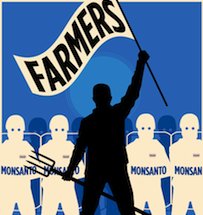
Eleven prominent law professors and fourteen renowned organic, Biodynamic®, food safety and consumer non-profit organizations have filed separate briefs with the Court of Appeals for the Federal Circuit arguing farmers have the right to protect themselves from being accused of patent infringement by agricultural giant Monsanto.
The brief by the law professors and the brief by the non-profit organizations were filed in support of the seventy-five family farmers, seed businesses, and agricultural organizations representing over 300,000 individuals and 4,500 farms that last year brought a protective legal action seeking a ruling that Monsanto could never sue them for patent infringement if they became contaminated by Monsanto's genetically modified seed. The case was dismissed by the district court in February and that dismissal is now pending review by the Court of Appeals. The plaintiffs recently filed their opening appeal brief with the appeals court.
 |
| Image Source |
Eleven prominent law professors and fourteen renowned organic, Biodynamic®, food safety and consumer non-profit organizations have filed separate briefs with the Court of Appeals for the Federal Circuit arguing farmers have the right to protect themselves from being accused of patent infringement by agricultural giant Monsanto.
The brief by the law professors and the brief by the non-profit organizations were filed in support of the seventy-five family farmers, seed businesses, and agricultural organizations representing over 300,000 individuals and 4,500 farms that last year brought a protective legal action seeking a ruling that Monsanto could never sue them for patent infringement if they became contaminated by Monsanto's genetically modified seed. The case was dismissed by the district court in February and that dismissal is now pending review by the Court of Appeals. The plaintiffs recently filed their opening appeal brief with the appeals court.
Friday, May 27, 2011

Sunday, March 13, 2011
Groundbreaking New UN Report on How to Feed the World's Hungry: Ditch Corporate-Controlled Agriculture
http://c3ceefr8kopngdd42ijnrckxzk.hop.clickbank.net/?tid=GPAhttp://fa24dlv8jgooh53a9hples0lfx.hop.clickbank.net/?tid=GPA
Wednesday, December 1, 2010
Why the Tester Amendment Does NOT Help Small Food Producers Under S.510
The Tester "Small Farm" Exemption to S.510 Exposed as a Scam: Part 1
Eric Blair
Activist Post
Some of our readers and others have requested that we reference specific sections of the Tester Amendment to food safety bill S. 510 to outline why this does not help or exempt small food producers. The amendment has been sold to the critical public as "exempting" small farms and food producers from the entirety of the heavy-handed regulations of the Food Safety Modernization Act. Yet, nothing could be further from the truth.
These small producer exemptions are only for "qualified facilities" and only pertain to subsections (a) through (i) and subsection (n) of S.510 -- as outlined on page 5, line 15 in the Tester Amendment:
 Because small producers are being forced to jump through stringent local and Federal regulatory hoops just to qualify, the bill appears to be designed not to make it "illegal" to sell homegrown goodies, as some suggest, but to make the system so cumbersome that small producers will say forget it and give up their local food business -- which is what many, including yours truly, have speculated is the hidden corporate agenda of the bill.
Fresh food that lasts from eFoods Direct (Ad)
Live Superfoods It is time to Wake Up! You too, can join the "Global Political Awakening"!
Print this page

 |
| Dark Days for Small Farmers (photo: Life.com) |
Activist Post
Some of our readers and others have requested that we reference specific sections of the Tester Amendment to food safety bill S. 510 to outline why this does not help or exempt small food producers. The amendment has been sold to the critical public as "exempting" small farms and food producers from the entirety of the heavy-handed regulations of the Food Safety Modernization Act. Yet, nothing could be further from the truth.
These small producer exemptions are only for "qualified facilities" and only pertain to subsections (a) through (i) and subsection (n) of S.510 -- as outlined on page 5, line 15 in the Tester Amendment:
(2) EXEMPTION. --A qualified facility--
(A) shall not be subject to the requirements under subsections (a) through (i) and subsection (n) in an applicable calendar year.Therefore, even a "very small business" making less than "$500K per year," doing business "within 275 miles" and directly with "end-user customers" is still required to adhere to all of the regulations in the remaining subsections of the bill. That's point number one which I'll return to in Part 2 of this essay.
Curiously, the only mainstream story to cover the contents of the Tester Amendment was a four-sentence article by the Associated Press which was released on a Friday and seemed purposely short on details. It only makes the claim that the Tester Amendment allows "some" small farms to "avoid expensive food safety plans:"
The agreement brokered by Tester would allow farmers who make less than $500,000 a year in revenue and sell directly to consumers, restaurants or grocery stores within their states or within 275 miles of their farms to avoid expensive food safety plansrequired of larger operations. (My emphasis in bold)
These expensive food safety plans are apparently a reference to subsection (h) of S.510:
Written Plan and Documentation- The owner, operator, or agent in charge of a facility shall prepare a written plan that documents and describes the procedures used by the facility to comply with the requirements of this section, including analyzing the hazards under subsection (b) and identifying the preventive controls adopted under subsection (c) to address those hazards. Such written plan, together with the documentation described in subsection (g), shall be made promptly available to a duly authorized representative of the Secretary upon oral or written request.
Ironically, the Tester Amendment clearly states that in order for a small producer to become a "qualified facility" for these exemptions, they must submit the following to the Secretary upon request:
- 3 years of comprehensive financial records indicating less than $500K in gross sales (Pg. 4, Line 11)
- I. Documentation that the owner, operator or agent of the facility has identified potential hazards associated with the food being processed, is implementing preventative controls to address those hazards, and is monitoring the preventative controls to ensure that such controls are effective (Pg. 5 line 20).
- II. Documentation (which may include licenses, inspection reports, certificates, permits, credentials, certification by an appropriate agency (such as the State Department of Agriculture) or other evidence of oversight), as specified by the Secretary that the facility is in compliance with state, local, county, or other non-Federal food safety law (Pg. 6, Line 5).
Those requirements bear a striking resemblance to the "expensive" food safety plans outlined in subsection (h) of S.510 that small producers are supposedly exempt from. In other words, they must submit similarly comprehensive plans just to qualify to be exempt from creating them. But it gets worse.
If Grandma wants to sell her famous raspberry jam at the county fair (within 275 miles of her canning kitchen) she will indeed be a qualified for small producer exemptions, but not before she forks over 3 years of financials, documentation of hazard control plans, and all local licenses, permits, and inspection reports. She must submit this documentation to the satisfactory approval of the Secretary; and if she fails to do so, the entirety of S.510 can be enforced on her. That's hardly what I would call an exemption.
Forget the alarmist claims made by S.510 critics for moment. The one thing this bill will undeniably do is squeeze the little local guy out of the food industry through excessive regulation -- regardless of the political backslapping or media joy over bipartisanship and propaganda over "exemptions." The bottom line is that it's common sense that local organic farmers produce a healthier and more nutritious product than their factory-farm counterparts, yet it is those promoting health who will suffer the most under this food "safety" bill.
Stay tuned for Part 2 where I will expose the remaining subsections of the bill that apply to even those with so-called small producer exemptions.
RELATED ARTICLES:
Propaganda Alert: AP reports Small Farms are Exempt from Food Safety Bill
Food Fascism in The Land of The Free
Raiding and Regulating the New Enemy in the War on Drugs: Rawesome Foodies

RELATED ARTICLES:
Propaganda Alert: AP reports Small Farms are Exempt from Food Safety Bill
Food Fascism in The Land of The Free
Raiding and Regulating the New Enemy in the War on Drugs: Rawesome Foodies

Fresh food that lasts from eFoods Direct (Ad)
Live Superfoods
Print this page
Friday, November 26, 2010
Raiding and Regulating the New Enemy in the War on Drugs: Rawesome 'Foodies'

Activist Post
As if the prohibition of non-corporate drugs wasn't already enough of a tragedy of liberty, the Feds are now increasingly arming themselves to raid peaceful organic farms, food Co-Ops, and even Amish dairies over raw milk.
This past week the Los Angeles Times reported that policeman, with guns drawn, raided a private organic food store in Venice California called Rawesome Foods:
With no warning one weekday morning, investigators entered an organic grocery with a search warrant and ordered the hemp-clad workers to put down their buckets of mashed coconut cream and to step away from the nuts.
Then, guns drawn, four officers fanned out across Rawesome Foods in Venice. Skirting past the arugula and peering under crates of zucchini, they found the raid's target inside a walk-in refrigerator: unmarked jugs of raw milk.
One of the shocked owners was quoted saying, "There's a medical marijuana shop a couple miles away, and they're raiding us because we're selling raw dairy products?" As if either one being raided by the armed thugs of Corporate-Federal tyranny is acceptable. This would seem to be the most obvious abuse of our inalienable human rights, and the sovereignty over our own physical being; purely designed to intimidate those who wish freely to choose what they ingest into their own bodies.
When we witness the utter absurdity of the war on marijuana, and now raw milk, the hypocrisy over health safety clearly tells us that much more is behind their continued prohibition in many of the United States. The corporate masters simply can't allow us to have these rights or their cartels would lose control over our bodies. Incidentally, it is estimated that at least 75% of our diet is now patented GMO foods.
The controllers know that this health-safety hypocrisy is too obvious to continue legislating against overwhelming public will, so they must create commercial statutes and regulations written by the chemical and food cartels themselves. Then they use the local authorities to enforce their monopolies to the detriment of true free markets, authentic health safety, and individual liberty.
Now that it is becoming clear that marijuana will indeed be legalized in California or elsewhere -- perhaps not this year, but soon -- the corporate robber barons are rushing in regulations to squeeze out the small farmer. In a recent Associated Press story this process was referred to as the "Wal-Marting" of weed:
After weathering the fear of federal prosecution and competition from drug cartels, California's medical marijuana growers see a new threat to their tenuous existence: the 'Wal-Marting' of weed.
The Oakland City Council on Tuesday will look at licensing four production plants where pot would be grown, packaged and processed into items ranging from baked goods to body oil. Winning applicants would have to pay $211,000 in annual permit fees, carry $2 million worth of liability insurance, and be prepared to devote up to 8 percent of gross sales to taxes.A similar bullying tactic occurs with raw milk sales, where "commercial feed licenses" must be applied -- a process which varies from state to state. Additionally, there are also proposals that will make the small commercial farmer register and tag individual livestock, while large multinationals will need only one tag per barn load, yet again defeating the little guy through economics. Whenever a new grassroots trend business begins its free-market climb, the elite find a way to coral the market. It's happening to organic foods, natural supplements, and even biofuels.
It's worth noting, the strategy they use to dominate products like biofuels is to create a quality standard to qualify for commercial sales, where the producer must have each batch tested to meet these standards before selling their product. The catch is that these tests can run in the thousands of dollars, therefore a small producer who may only produce 5000 gallons per batch can no longer afford to test their product and sell for a profit, while the big boys can.
And once the elite have total control they can easily manipulate food shortages for a number of desired outcomes to benefit their agenda. These are the small battles that "free market" Libertarians refer to when they scream about big government and over-regulation. Surely, some liberal raw "foodies" are now getting the message when their freedom to be healthy is being threatened by tyrannical corporate regulation.
"This is about control and profit, not our health," said Aajonus Vonderplanitz, co-founder of Rawesome Foods. "How can we not have the freedom to choose what we eat?" Incidentally, John Mackey, CEO of Whole Foods, describes his awakening from liberal to libertarian views in his book Be the Solution

 , precisely because of this Corporate-Federal hijacking of healthy products. The owners of Rawesome foods and others like them must realize that they are in the same battle as private medical marijuana Co-Ops and small organic farmers. They all must continue to thrive as they play a key role in defeating the multinational food powerhouses, building local self-sufficiency, and restoring personal freedom.
Of course, all of this "regulation" is done in the name of our safety because, you know, the sheep need their shepherd. That is why the U.N. and the World Health Organization have been working hard for many years (since 1963) to quietly create an international standard for controlling natural foods and health products called Codex Alimentarius -- Latin for "food code." Many good pro-natural health progressives and and civil libertarians are teaming up to defeat proposed freedom-shredding regulations.
Watch video below on the Codex Alimentarius to learn more:
Related Articles:
USDA Reports Food Shortages: Wall Street 'Caught Off Guard' by Severity
Using Local Organic Cooperatives to Defeat Globalists
7 Secret Ways We Are Being Poisoned
Fresh food that lasts from eFoods Direct (Ad)
Live Superfoods
Print this page
Thursday, November 25, 2010
Arkansas Declared Disaster Area Due To Drought

According to press releases from all of the state's congressional delegations, farmers are now eligible for emergency loans from the Farm Service Agency to help cover the losses to their crops.
The clock is now ticking on the eight-month window of opportunity to apply for those loans and for the Supplemental Revenue Assistance Program.
How Farm Subsidies Harm Taxpayers, Consumers, and Farmers, Too
Fresh food that lasts from eFoods Direct (Ad)
Live Superfoods
Print this page
Endgame Legislation: Lame Duck Session Ushers in Tyranny

Activist Post
When most of us think about "lame duck" Congressional sessions we think of a "do-nothing" government. However, this so-called lame duck session appears to be a time where legislation that has the most restrictions to individual rights is being rammed through.
It seems the members of government who have been recently voted out of office are vying for corporate jobs by pushing such legislation as the Food Safety Modernization Actand the Combating Online Infringement and Counterfeits Act which are now on the fast track to becoming law. Both of these laws reek of tyranny for the citizens and a means of corporate consolidation for the big boys.
It seems whenever a piece of legislation has the word "safety" in it we can expect to lose our right to make our own decisions. For example, consumer protection groups pushed hard for the Consumer Product Safety Improvement Act in 2008 after large numbers of Chinese-made toys and other products proved to have dangerously unhealthy toxins.
Consequently, the bill was passed with 407 Ayes, 0 Nays in the House. Only later did the public find out that the bill did more to regulate, tax, and impose fines on neighborhood garage sales than it did to stop dangerous Chinese imports. Clearly, the bill is used to clamp down on an individual's right to sell their used items without governmental oversight. In other words, the corporate-government will not allow any form of black market to threaten their cartel control of consumerism.
The Food Safety Modernization Act has the backing of establishment liberals who think more big government regulation will protect us from food-borne diseases derived from factory farming. Their heart seems to be in the right place, but placing trust in this horribly corrupt government to "protect" us makes them utterly gullible. The vote of 74-25 in the Senate proves the bill was more broadly supported than just with progressives, indicating strong corporate support from the Big-Agri lobby that wrote the bill. According to Darrell Castle of the Constitution Party, the bill purports to:
- Preclude the public’s right to grow, own, trade, transport, share, feed and eat each and every food that nature makes.
- It will more than likely make Michael Taylor (former Monsanto executive) the Food Czar.
- End U.S. sovereignty over its own food supply by forcing compliance with WTO guidelines.
- Even direct sales of food between individuals could be defined as smuggling under the language of the bill.
- Codex Alimentarius, a global system of control over food and food supplements, would control all U.S. food and supplements. Access to natural food supplements would be removed under Codex rules.
- Control of all seeds would transfer to Monsanto and other global multinationals.
- The National Animal Identification System ( NAIS ) would be enacted, forcing bio-chipping and other identification and tracking methods for all animals, whether food or pets.
- What is left of the American food system would be transferred into total control of Multinational Corporations under the guise of global governance.
We should know by now that nearly all legislation is not written or read by our elected officials, but rather by heavy-handed corporate interests who seek nothing less than total domination over their industries. Yet, the public is still easily swayed.
The second piece of legislation that was flushed out of the Judiciary Committee last week with a 19-0 vote is the Combating Online Infringement and Counterfeits Act (COICA). This bill is pure tyranny against Internet freedom. In other words, they're not even using the guise of protecting the people to hammer this one home. This bill seeks to arbitrarily create an Internet "Blacklist" of domains, much like the arbitrary "Terror Watch List." The government is seeking the power to shut access to sites it flags . . . no judge, no evidence, no jury. The law will also apply to websites hosted outside the U.S. where the corporate-government will claim global control over information on the Internet. The government plans to enforce the blocking of these Blacklisted websites by using major Internet service providers (ISPs).
To demonstrate how draconian this bill is, Copyright Laws are already very clear where if a media corporation can demonstrate that a given website used their material against Fair Use rights, they can be sued individually for damages. This new law will bypass the current legal system of innocent until proven guilty with no warnings, presentation of evidence of wrong-doing, or determination of fault by a jury of peers. Although the legislation is said to be focused on sharing movies, music, and television shows; the copyright violations are defined very broadly and will surely extend to any usage of Associated Press or Reuters stories (or the like) and/or images.
This broad definition will essentially put all alternative news websites in violation despite their Fair Use rights. In fact, nearly every article or commentary about world events that is covered by independent news organizations that quote or link to mainstream media stories as a reference may be in violation (including this article you're reading). The COICA will effectively crush any opposition to the mainstream media's domination on the currently free and open world wide web. If properly debated and dissected there is no way this bill would be passed, hence the rushing to pass it under a quiet Congressional session.
Both of these bills will likely become laws given their overwhelming support in Congress. When enacted, the corporate-government tyranny will begin to work stealthily to regulate their competition out of the marketplace. By the time the vast majority of people realize this tyranny, it will be too late to complain as the independent voices will assuredly be Blacklisted from any debate.
RECENTLY by Eric Blair:
Eurozone Debt Crisis 2.0: Dollar Sucks Less than Euro, Again
Highly Enriched Uranium has a Spot Price on the Black Market?
Baby Boomers: Get Out of the Stock Market Now

Fresh food that lasts from eFoods Direct (Ad)
Live Superfoods
Print this page
Subscribe to:
Posts (Atom)