Translate

GPA Store: Featured Products

Showing posts with label HEALTH AND NUTRITION. Show all posts

Thursday, December 9, 2010

TODAY ON THE ALEX JONES SHOW 12/9/10

TODAY ON THE ALEX JONES SHOW
  • Bob Barr
  • Joseph Mercola
Alex welcomes to the show Joseph Mercola, an osteopathic physician, health activist, and entrepreneur. Mercola criticizes many of the practices of mainstream medicine and the Food and Drug Administration, particularly vaccination and the use of prescription drugs and surgery to treat diseases. He encourages using water filters to purify drinking water and is strongly opposed to water fluoridation. Alex also talks with Colorado attorney Gary Fielder who has filed a lawsuit under the Fourth Amendment against the TSA and the Department of Homeland Security over the use of naked body scanners. Alex also covers the latest news and takes your calls.


Buy 1 Get 2 Free at Botanic Choice Buy 1 Bottle and Get 2 FREE (select items), plus Free Shipping on $25+ Expires 12/31/2010

Fresh food that lasts from eFoods Direct (Ad)

Live Superfoods It is time to Wake Up! You too, can join the "Global Political Awakening"!

Print this page

PureWaterFreedom

Tuesday, November 23, 2010

FDA: Gilead ad for Truvada 'misleading'

Editor's Note:  I would recommend that you do some research about any new medication on the market, even those approved by the FDA considering the close relationship which exists between the FDA and the Pharmaceutical industry. A revolving door exists between many drug companies and the FDA.  I also recommend that you watch the video below in which a scientific researcher admits that AIDS was developed by the U.S. during the development of the polio vaccines.


Regulators have warned Gilead Sciences Inc. about direct-to-consumer print advertising for its HIV drug, Truvada.

The Food and Drug Administration said Gilead's ad for Truvada touts the drug as "better or more effective than has been demonstrated." It asked Foster City-based Gilead (NASDAQ: GILD) to "immediately cease" the ads.

Specifically, the FDA takes issue with ads that show photographs of a woman who takes Truvada as part of her HIV combination therapy — at graduation, in an office setting and as a married woman sitting on a sofa — and appears to be happy and in good health. The headline above the images states, "HIV doesn't have to change the hopes and dreams I have now." Among the claims below the images is the line, "With once a day Truvada for my HIV, I can plan for long-term success."

"The print ad is false or misleading because it overstates the efficacy of Truvada, makes unsubstantiated claims and minimizes the risks associated with the drug," the FDA regulatory review officer Aline Moukhtara said in a letter to Joyce Acbay, Gilead's director of regulatory affairs.

The FDA said the "totality of these claims and presentations misleadingly suggests" that patients using Truvada can manage their HIV-1 RNA levels, or viral load, and increased CD4 cell count on a long-term basis. That, however, "has not been demonstrated by substantial evidence or substantial clinical experience," the FDA said.

Gilead does note in the ad — "in small, non-prominent font," the FDA said — that Truvada was evaluated "through 3 years of a clinical study" and "proven over the long term … in 3 years of a clinical study."

"However, this contextual information does not mitigate the overwhelming impression created by the prominent images and claims in the print ad, which suggest that patients can expect long-term treatment success with Truvada as they achieve their hopes and dreams, such as graduation, a career and marriage," the FDA said in its letter. "Any of these goals can easily take more than three years to accomplish."

Biogen Idec also was warned by the agency for a webcast promoting the multiple sclerosis therapy Tysabri.

Read more: FDA: Gilead ad for Truvada 'misleading' | San Francisco Business Times 


The following video suggests that the AIDS epidemic in the United States was deliberately created by Dr. Robert Gallo:


Dr. confesses Cancer & other Viruses is found in Vaccines


Fresh food that lasts from eFoods Direct (Ad)

Live Superfoods It is time to Wake Up! You too, can join the "Global Political Awakening"!

Print this page

PureWaterFreedom

Thursday, November 4, 2010

Do Mammogram's Increase the Risk of Breast Cancer?

Shirley's Wellness Cafe

"Mammograms increase the risk for developing breast cancer and raise the risk of spreading or metastasizing an existing growth," says Dr. Charles B. Simone, a former clinical associate in immunology and pharmacology at the National Cancer Institute." In addition, mammography provides false tumor reports between 5 and 15 percent of the time. False positive results cause women to be re-exposed to additional X rays and create an environment of further stress, even possibly leading to unneeded surgery.

Ralph W. Moss, Ph.D. - "Conventional cancer therapy is so toxic and dehumanizing that I fear it far more than I fear death from cancer. We know that conventional therapy doesn't work--if it did, you would not fear cancer any more than you fear pneumonia. It is the utter lack of certainty as to the outcome of conventional treatment that virtually screams for more freedom of choice in the area of cancer therapy. Yet most alternative therapies regardless of potential or proven benefit, are outlawed, which forces patients to submit to the failures that we know don't work, because there's no other choice."


Linda Page, N.D. Ph.D - "Of the women in menopause today, about half start synthetic hormone replacement, but only half of those stick  with it because of the side effects or fear of cancer risk. The threat of breast and uterine cancer is dramatically increased with HRT".

An Australian team from the University of Queensland see little, if any, benefit in screening women under 50 years of age, but they do point out some of the serious negative effects - later ill effects from the radiation they are exposed to during the mammogram, the possibility that an existing tumor may spread due to the pressure exerted on the breast during screening, and the anxiety caused by frequent false- positive results. The Canadian researchers point out that a false-positive result may not only produce great stress, but may also lead to unnecessary biopsies and surgery. They also point out that mammography misses 10-15 per cent of early breast cancers thus providing a false sense of security.

Why Mammography is NOT an Effective Breast Cancer Screen
Dr. Mercola 


How Mammography Increases Your Cancer Risk - X-rays and other classes of ionizing radiation have been, for decades, a proven cause of virtually all types of biological mutations. When such mutations are not cell-lethal, they endure and accumulate with each additional


exposure to x-rays or other ionizing radiation. X-rays are also an established cause of genomic instability, often a characteristic of the most aggressive cancers. Additionally, radiation risks are about four times greater for the 1 to 2 percent of women who are silent carriers of the A-T (ataxia-telangiectasia) gene, which by some estimates accounts for up to 20 percent of all breast cancers diagnosed annually.

When everything is taken into account, reducing exposure to medical radiation such as unnecessary mammograms would actually likely reduce mortality rates. The practice of screening mammography itself poses significant and cumulative risks of breast cancer, especially for premenopausal women. Making matters even worse, false positive diagnoses are very common – as high as 89 percent – leading many women to be unnecessarily and harmfully treated by mastectomy, more radiation, or chemotherapy. There are instances where mammography may be warranted. But the fact remains that there are other technologies that are proven to be more effective, less expensive, and completely harmless, that can save far more lives.

Now, imagine being able to look inside yourself and be able to get as much as 10 years warning that something is about to develop, giving you ample time to PREVENT the cancer from forming in the first place by taking the appropriate lifestyle changes that can radically change your health. That technology already exists, and has been available since the 1960s. 


Dr. Len Saputo explores the latest findings on the effectiveness and shortcomings of various detection methods used by the mainstream medical community, including mammography, clinical breast exams, ultrasound, and to a lesser extent, magnetic resonance imaging (MRIs) and PET scans.

Danish researcher Dr. Peter Gotzsche first made this claim in a study published in "The Lancet" in October 2006. Gotzsche had re-analyzed the studies originally done on the benefits of mammograms and found them unconvincing. Since then, other doctors have begun to assert that in addition to failing to offer protection, mammograms — which involve exposing patients to radiation —may actually increase women's risk of cancer. "The latest evidence shifts the balance towards harm and away from benefits," said Dr. Michael Baum of University College in London. Gifford-Jones also points to other risks, from the physical to the psychological. According to some authorities, the squeezing of women's breasts during mammograms may rupture blood vessels, causing cancer to spread to other parts of the body and actually increasing a patient's risk of death. He also pointed to the trauma suffered by women who receive false positives from their mammograms, and to the dangerous sense of security felt by those who receive false negatives.  more...


Some years ago a British surgeon blasted American doctors as "immoral" for screening women under 50 for breast cancer. On a visit to the Long Island Jewish Hospital Medical Center Dr. Baum said the screening was "opportunistic" and did more harm than good. "Over 99 percent of premenopausal women will have no benefit from screening. Even for women over 50, there has been only a one percent biopsy rate as a result of screening in the United Kingdom. The density of the breast in younger women make mammography a highly unreliable procedure." (Medical Tribune, 3/26/92)

A yet unpublished Canadian study even suggests, the rumor goes, that younger women are more likely to die if they expose themselves to mammograms instead of just relying on physical breast exams. The investigators say this earlier finding has not proven to be true but Dr. Cornelia Barnes of the University of Toronto said: "We will not say that mammography kills. The conclusion that will be reached is that younger women do not benefit [by having a reduced mortality]." (Emphasis added.)

Dr. Barnes said the danger of early mammograms is not from radiation but from false-positive results that can lead to unnecessary biopsies, resulting in scar tissue that can make subsequent mammograms more difficult to read. more

"Screening mammography poses significant and cumulative risks of breast cancer for premenopausal women. The routine practice of taking four films of each breast annually results in approximately 1 rad (radiation absorbed dose) exposure, about 1,000 times greater than that from a chest x-ray. The premenopausal breast is highly sensitive to radiation, each 1 rad exposure increasing breast cancer risk by about 1 percent, with a cumulative 10 percent increased risk for each breast over a decade's screening. These risks are even greater for younger women subject to "baseline screening." Dr. Mercola

The Breast Stays Put: No Chemo-No Radiation-No Lumpectomy-No Thank You 
"After running her own successful business in Wellness Alternatives, Pamela Hoeppner faced the unthinkable. She was diagnosed with a malignant, fast-growing breast cancer. Pam declined all conventional treatment and chose an alternative approach with an impressive track record instead, which resulted in her full recovery. Convinced that mutilation and toxic treatments are not always necessary she wanted others to know there ARE options that don't involve devastating a person's body and their quality of life. In her inspiring book, The Breast Stays Put, with a delivery all her own, she shares her courageous story of overcoming a deadly diagnosis, and provides prevention and treatment information through her informative website www.TheBreastStaysPut.com.

A wonderfully written first-hand account of how one woman overcame her life-threatening diagnosis of cancer
using only alternative medicine. A must read for anyone diagnosed with breast cancer, but I highly recommend it to anyone interested in learning more about treating cancer with alternative therapies. David Brownstein, MD, Author of Drugs That Don't Work and Natural Therapies That Do All too often people are frightened into a medical or surgical course of action, when what they really need is encouragement to take control of their own health and path to wellness. Pam's story is a testimony to the benefits of doing just that.

The Breast Stays Put is a beacon of hope that everyone facing serious illness should read. Bridget Houston, ND NHE Hoeppner has achieved something few writers can. She has turned a serious, scary subject into a fun read while presenting important life-saving information at the same time. I particularly enjoyed her unique brand of humor and her gutsy words of wisdom that can't help but infuse the reader with courage." Tanya Harter Pierce, MA, MFCC, Author of Outsmart Your Cancer: Alternative Non-Toxic Treatments That Work 

Read the stories of other breast cancer recovery


Fresh food that lasts from eFoods Direct (Ad)

Live Superfoods It is time to Wake Up! You too, can join the "Global Political Awakening"!

Print this page


PureWaterFreedom

Wednesday, November 3, 2010

HSI Critical Alert! Ritalin and Children - increases death by 600%

YouTube
HSIAlert


The FDA's at it again. Protecting their sacred cash cow Big Pharma. And this time it might be at the expense of your child or grandchild's life.

A recent study conducted by the FDA and the National Institute of Mental Health revealed shocking information about the potential danger of Ritalin and other ADHD drugs to children. 

These safe drugs may greatly increase the risk of sudden death. Yet no one is sounding the alarm. Least of all the FDA.

Get the facts you need to protect your children. Their very lives may depend on it! Watch this important video and visit http://www.hsibaltimore.com/youtube for more information.

Sign up for my FREE daily e-Alert for urgent health alerts you, and your family, need to know http://hsibaltimore.com/sign-up-today/


Fresh food that lasts from eFoods Direct (Ad)

Live Superfoods It is time to Wake Up! You too, can join the "Global Political Awakening"!

Print this page

PureWaterFreedom

Dengue fever death toll rises in Pakistan: Is the U.S. conducting Biological Warfare?

by Mark Daniels
Global Political Awakening
(Image: Jared Rodriguez / t r u t h o u t;
Adapted: dr_relling, piPhotos)

Dengue fever death toll rises to 31 in Pakistan, according to recent reports. The people currently affected with the Dengue virus mounts to 5,000 all across Pakistan.


According to the recent reports, Dengue Virus is spreading all over the Country like a wild fire and have claimed over 31 lives till now. Physicians all across the country are concerned about the situation and are advising people not to drain water near their homes and street and keep all the pots of water covered all the time.


It has been stated by the National Health Department (NHD) of Pakistan that the confirmed dengue fever patients all across the country, raised to 5,050.


According to the report by the National Health Department 2,350 Dengue fever patients are registered in Sindh, 1,885 in Punjab, while as many as 158 dengue fever patients are under treatment in Khyber Pakhtoonkhaw.


According to the report there are at least 380 dengue fever patients in Rawalpindi, while 230 in the capital city Islamabad.


Florida, Dengue Fever and CIA Biological Warfare


The following article, Florida Dengue Fever Outbreak Leads Back to CIA and Army Experiments by H.P. Albarelli Jr. and Zoe Martell, provides the full details linking the CIA's biological warfare programs with outbreaks of dengue fever in Florida Keys. Albarelli Jr. and Martell reported:


With little fanfare on July 13, Florida officials released the findings of a Centers for Disease Control (CDC) study conducted recently in the Key West area revealing that about 10 percent, or 1,000 people, of the coastal town's population are infected with the dengue fever virus.

While the July 13 release made little mention of it, the CDC study was provoked by an earlier 2009 report that a woman in New York State, who had returned from a Florida Keys' visit, had contracted dengue fever. Within a few weeks of this initial report, two additional cases were discovered in people who had returned from Key West. Over the next three months of 2009, an additional 26 cases were identified, all tied to visits to the town.

Because of these reported cases, the Florida Keys Mosquito Control District conducted greatly increased aerial spraying to control mosquitoes. Following the spraying, a small amount of other cases were reported, including that of a 41-year-old Key West man who found blood in his urine and had severely aching joints. Following these additional reports, the CDC launched its study of antibodies in Key West residents and found that 5 percent of the town's residents have been exposed to the dengue virus. Said CDC dengue expert, Dr. Christopher J. Gregory, "The best estimate from the survey is that about 5 percent of [residents] was infected in 2009 with dengue." Gregory also stated, "We have known for a while it is a possible risk, but this outbreak shows it is more than possible: It is something that did happen and could happen again."

Despite the low-key nature of the Florida release, the Homeland Security Administration immediately issued a "terror alert" concerning the findings and Monroe County, within which Key West is located, also issued its own health advisory warning "effective immediately."

Said Bob Eadie of the Monroe County Health Department, "Dengue is rare in Florida, but not unknown. It's just one of several mosquito-borne illnesses monitored by the department and why we continually remind the public to take precautions against bites." Eadie added, "Many people may be infected and not develop any symptoms. Our department and the CDC will have to do some detective work after interviewing and drawing blood from residents who appear to be perfectly fine but may have the virus."

Dengue fever is a virus-based disease spread by the bites of mosquitoes. It can be caused by any one of four separate but related viruses carried by infected mosquitoes, most commonly the mosquito Aedes aegypti, found in tropic and subtropic areas. It is commonly found in Southeast Asia, South and Central America, Indonesia and sub-Saharan Africa. Over the past several decades it has been consistently reported that dengue fever has been eradicated in North America. Dengue hemorrhagic fever is a far more severe form of the dengue virus. If untreated, it can be fatal. The chief symptoms of dengue fever are a high fever, severe headache, strong pain behind the eyes, joint, muscle and bone pain, easy bruising, rash and mild bleeding from the nose and gums. There is no cure or vaccine for dengue fever. One can only treat the symptoms in such ways as getting plenty of rest, drink plenty of water, take pain relievers with acetaminophen and promptly consult a skilled physician.

Hidden History of Dengue

It appears highly unlikely that any "detective work" performed by the CDC and Florida health officials will unearth evidence of dengue fever being imported into Florida, but that evidence certainly exists. Prior to the recent Key West findings and still today, the CDC has consistently reported that there have been no outbreaks of dengue fever in Florida since 1934 and none in the continental US since 1946. This report is incorrect.


Unknown to most Americans is that dengue fever has been the intense focus of US Army and CIA biological warfare researchers for over 50 years. Ed Regis notes in his excellent history of Fort Detrick, "The Biology of Doom," that as early as 1942 leading biochemists at the installation placed dengue fever on a long list for serious consideration as a possible weapon. In the early 1950s, Fort Detrick, in partnership with the CIA, launched a multi-million dollar research program under which dengue fever and several addition exotic diseases were studied for use in offensive biological warfare attacks. Assumably, because the virus is generally not lethal, program planners viewed it primarily as an incapacitant. Reads one CIA Project Artichoke document: "Not all viruses have to be lethal ... the objective includes those that act as short-term and long-term incapacitants." Several CIA documents, as well as the findings of a 1975 Congressional committee, reveal that three sites in Florida, Key West, Panama City and Avon Park, as well as two other locations in central Florida, were used for experiments with mosquito-borne dengue fever and other biological substances.


The experiments in Avon Park, about 170 miles from Miami, were covertly conducted in a low-income African-American neighborhood that contained several newly constructed public housing projects. CIA documents related to its top-secret Project MK/NAOMI clearly indicate that the mosquitoes used in Avon Park were the Aedes aegypti type. Specially equipped aircraft, in one of the larger experiments, released 600,000 mosquitoes over the area. In one of the Avon Park experiments, about 150,000 mosquitoes were dropped in paper bags designed to open upon impact with the ground. Each bag held about 1,000 insects. Besides dengue, some of the mosquitoes were also carrying yellow fever.

Avon Park residents, still living in the area, say the experiments resulted in "at least 6 or 7 deaths." One elderly resident told Truthout, "Nobody knew about what had gone on here for years, maybe over 20 years, but in looking back it explained why a bunch of healthy people got sick quick and died at the time of those experiments." Interestingly, at the same time experiments were conducted in Florida, there were at least two cases of dengue fever reported among civilian researchers at Fort Detrick in Maryland.

A 1978 Pentagon publication, entitled "Biological Warfare: Secret Testing & Volunteers," reveals that the Army's Chemical Corps and Special Operations and Projects Divisions at Fort Detrick conducted "tests" similar to the Avon Park experiments in Key West, but the bulk of the documentation concerning this highly classified and covert work is still held by the Pentagon as "secret." One former Fort Detrick researcher says the Army "performed a number of experiments in the area of the Keys," but that "not all concerned dengue virus."

In 1959, Fort Detrick launched its largest mosquito experiment called Operation Bellwether, consisting of over 50 field experiments. Some of these experiments, designed to ascertain the "rate of biting" and "mosquito aggressiveness," were conducted in partnership with scientists with the Rockefeller Institute in New York, where scientists bred their own strain of mosquitoes. Some of the Bellwether experiments were conducted in Florida, as well as in other states, including Georgia, Maryland, Utah and Arizona.

The 1978 Pentagon publication, along with two other Chemical Corps reports, reveal the identities of a number of the companies and institutions that assisted the Army in its offensive biological warfare experiments: Armour Research Foundation (1951-1954); the Battelle Memorial Institute (1952-1965); Ben Venue Labs, Inc. (1953-1954); University of Florida (1953-1956); Florida State University (1951-1953); and the Lovell Chemical Company (1951-1955).

In the spring and summer of 1981, Cuba experienced a severe hemorrhagic dengue fever epidemic. Between May and October 1981, the island nation had 158 dengue-related deaths with about 75,000 reported infection cases. Prior to this outbreak, Cuba had reported only a very small number of cases in 1944 and 1977. At the height of the epidemic, over 10,000 people per day were found infected and 116,150 were hospitalized. At the same time as the 1981 outbreak, covert biological warfare attacks on Cuba's residents and crops were believed to have been conducted against the island by CIA contractors and military airplane flyovers. Particularly harmful to the nation was a severe outbreak of swine flu that Fidel Castro attributed to the CIA. American researcher William H. Schaap, an editor of Covert Action magazine, claims the Cuba dengue outbreak was the result of CIA activities. Former Fort Detrick researchers, all of whom refused to have their names used for this article, say they performed "advance work" on the Cuba outbreak and that it was "man made."

In 1982, the Soviet media reported that the CIA sent operatives into Afghanistan from Pakistan to launch a dengue epidemic. The Soviets claimed the operatives were posing as malaria workers, but, instead, were releasing dengue-infected mosquitoes. The CIA denied the charges. In 1985 and 1986, authorities in Nicaragua accused the CIA of creating a massive outbreak of dengue fever that infected thousands in that country. CIA officials denied any involvement, but Army researchers admitted that intensive work with arthropod vectors for offensive biological warfare objectives had been conducted at Fort Detrick in the early 1980s, having first started in the early 1950s. Fort Detrick researchers reported that huge colonies of mosquitoes infected with not only dengue virus, but also yellow fever, were maintained at the Frederick, Maryland, installation, as well as hordes of flies carrying cholera and anthrax and thousands of ticks filled with Colorado fever and relapsing fever.

A review of declassified Army Chemical Corps documents reveal that the Army may have also been engaged in dengue fever research as early as the late 1940s. Several redacted Camp Detrick and Edgewood Arsenal reports indicate that experiments were conducted on state and federal prisoners who were unwitting exposed to dengue fever, as well as other viruses, some possibly lethal. Freedom of Information requests filed months ago for details on these early experiments remain unanswered.

Dengue Fever and BP Spill Complications

The timing of this outbreak of dengue fever presents two additional problems; the symptoms of dengue fever are very similar to that of exposures to chemicals such as those contained in crude oil and the dispersants currently being used in the contaminated areas of the Gulf of Mexico, potentially making it difficult to diagnose the source of a sufferer's symptoms. Worse yet, there looms the possibility that Corexit and other toxins present in the Gulf area may weaken the immune system, thus, setting the stage for more severe forms of the disease in people who are, or have previously been, exposed to the virus.

It is still unclear to what degree residents of the Gulf area, at large, have been or will be exposed to such chemicals in the long term, but there is mounting evidence that fishermen, cleanup workers, and others who spend significant time in contact with the Gulf waters are beginning to display symptoms consistent with chemically induced neurotoxicity. If dengue fever also spreads within the Gulf community, affecting a significant number of people, it will be increasingly difficult to differentiate the cause of symptoms in those who develop them; even in persons who test positive for dengue exposure, the additional possibility remains that chemical toxicity is present as well.

The presentation of dengue fever varies considerably from case to case. Numerous medical studies have identified asymptomatic infections, or infections that consist of only mild, flu-like symptoms that would likely not result in the sufferer seeking medical attention.

When more troubling symptoms are present, they vary considerably in severity. According to the CDC, milder cases of dengue fever are identified by a high fever accompanied by at least two of the following symptoms: severe headache; severe eye pain (behind eyes); joint pain; muscle and/or bone pain; rash; a mild bleeding manifestation such as bleeding gums, nose bleeds, or easy bruising; and low white cell count. In more severe cases, dengue can cause severe abdominal pain or persistent vomiting; red blotches or patches on the skin; more severe bleeding of nose or gums; vomiting of blood; black, tarry excrement (indicative of the presence of blood in the stool); drowsiness; irritability; cold or clammy skin; pallor; and difficulty breathing. The American Journal of Tropical Medicine and Hygiene has reported cases of dengue fever that resulted in neurological manifestations, as well.

Dengue fever can also cause a much more serious, hemorrhagic form of the disease, the presentation of which the CDC describes as follows:

"[A] fever that lasts from 2 to 7 days, with general signs and symptoms consistent with dengue fever. When the fever declines, warning signs may develop. This marks the beginning of a 24 to 48 hour period when the smallest blood vessels (capillaries) become excessively permeable ("leaky"), allowing the fluid component to escape from the blood vessels into the peritoneum (causing ascites) and pleural cavity (leading to pleural effusions). This may lead to failure of the circulatory system and shock and possibly death without prompt, appropriate treatment. In addition, the patient with DHF has a low platelet count and hemorrhagic manifestations, tendency to bruise easily or have other types of skin hemorrhages, bleeding nose or gums and possibly internal bleeding."

As if this were not troubling enough, let us compare the above symptom picture to the symptoms associated with exposure to the dispersants Corexit 9500 and Corexit 9527. The exact risks of exposure to these chemicals have yet to be determined; in fact, the manufacturers' material safety data sheet (MSDS) for Corexit 9500 states: "No toxicity studies have been conducted on this product." The MSDS further states that one should not come in contact with the product or breathe its vapors and that adequate protective skin protection and breathing apparatuses should be worn when handling or working with the compound. Any hints of safe usage within the MSDS on these chemicals should be viewed from the following perspective: the MSDS data assumes limited exposure (for example, while applying the chemical) and the use of adequate protective gear. These statistics do not apply, therefore, to unprotected people who may be subject to long-term, consistent exposure.

Many toxicologists have raised grave concerns, however, about the risks that these dispersants may pose to residents of the Gulf of Mexico area. Dr. Susan Shaw, a marine toxicologist, talked about her recent experience with shrimpers who had been working in the Gulf waters. In an interview on CNN, she addressed the situation of a shrimper who had thrown his net into water, causing the water to splash onto his unprotected skin. She reported that he developed a "headache that lasted 3 weeks, heart palpitations, muscle spasms, bleeding from the rectum ..." and continued, "and that's what this Corexit does, it ruptures red blood cells, causes internal bleeding and liver and kidney damage. ..." She asserts that the combination of oil from the well, combined with Corexit dispersant, increases the toxicity of both substances. In combination, she believes that they are skin permeable and that they aerosolize to produce a breathing hazard as well. The toxins can enter the body through the respiratory tract, but are unlikely to remain localized in the lungs, instead spreading throughout one's entire body system.

Numerous reports have come in from both residents of the Gulf area and journalists visiting the area that many people who are exposed to the water are beginning to experience health problems. Among the most commonly reported symptoms are burning eyes, skin rashes, lightheadedness, dizziness, difficulty breathing, transient numbness and shooting pains, persistent coughing, sore throats, muscle and bone aches, weakness and severe fatigue. More troubling reports, such as those of the shrimpers mentioned above, have included bleeding from the nose and from the rectum, as well as permanent numbness in extremities and complete loss of the sense of smell. It is generally accepted in the medical literature that, although the initial, acute presentation of toxic exposure is generally the most severe, symptoms may linger indefinitely or even result in permanent damage to the body.

Herein lies the dilemma: If a Gulf resident becomes ill, to what do we attribute his or her symptoms? In addition to the dispersants themselves, Gulf residents are potentially suffering from exposure to benzene and other toxic chemicals that are naturally present in crude oil, as well as several potentially toxic gases being released from the well. In combination with the dispersant, the exact toxicity risk of these chemicals remains unknown.

Add now, to the picture, the risk of having contracted dengue fever and the puzzle becomes more difficult to piece together. The CDC's 2009 survey contained samples from only 240 households and determined that about 5 percent of the residents had antibodies to the dengue virus, indicating either current infection or a prior exposure. This relatively small sample may not be indicative of the Florida population as a whole and may not be a valid indicator of the overall number of exposed people in the surrounding areas.

The medical literature indicates that dengue virus, like many other viruses, may remain in the body in a latent form; during latency, the virus is unlikely to cause symptoms. A second infection with dengue, however, can lead to a much more severe presentation of the disease and a greater likelihood of it progressing to its hemorrhagic (and potentially fatal) form. Likewise, the literature indicates that a severe assault to the immune system presents a risk of virus reactivation and resultant disease.

Dr. Shaw's assessment of the dangers of Corexit dispersant, particularly in combination with the other contaminants resulting from the damaged BP oil well, includes the potential for severe damage to the immune system. Such immune system suppression or damage, it seems, could then reactivate dengue fever in residents who carry the latent virus, perhaps even resulting in a more severe form of the disease's presentation.

Assuming the above quoted assessments of the current situation in Florida are accurate, the presence of the dengue virus in Florida at this time makes for a nightmarish picture. Not only is there a tremendous symptom overlap between dengue virus and toxin exposure, up to and including the potential for a hemorrhagic presentation of both, but there looms on the horizon a new and frightening possibility: The combined presence of this disease and a toxic environment might have the potential to combine, making an already tragic situation incrementally worse.


Considering, the details of the Florida situation, we must question the possibility of bio-warfare in Pakistan.

Fresh food that lasts from eFoods Direct (Ad)

Live Superfoods It is time to Wake Up! You too, can join the "Global Political Awakening"!

Print this page

PureWaterFreedom

Monday, October 25, 2010

The two most dangerous words you’ve probably never heard of

Adam Murdock, MD
Infowars.com
October 25, 2010
Few words in our society have undermined our freedoms as substantially as the word “fair.” This is because the idea of fairness has been twisted and used to change the definition of rights.
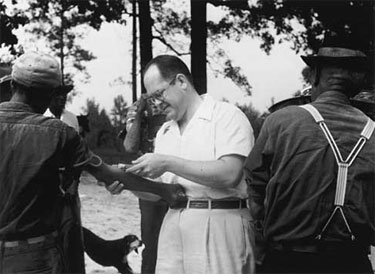
tusk.jpg
The Tuskegee Syphilis Study remains one of the most outrageous examples of disregard of basic ethical principles of conduct.
The original definition of rights as espoused by the founders was meant to protect “We the People” from all others by providing basic freedoms that could not be infringed upon. These rights provided a basic framework upon which individuals could determine their own destinies. However, they did not provide for or ensure that the outcomes of one’s aspirations, laborers, or laziness would be equal or protected.
As Thomas Jefferson puts it:
We in America entertain] a due sense of our equal right to the use of our own faculties, to the acquisitions of our own industry, to honor and confidence from our fellow-citizens resulting not from birth but from our actions and their sense of them (1).
Despite this historical precedent, over the last two centuries those who have differing philosophies about rights, including beliefs about equitable outcomes, have sought to provide a justification for such a fatal change in the basic definition of rights. Using images of the downtrodden, victims of medical happenstance, and depictions of greed, they have been successful at galvanizing emotional sympathy for their cause at the expense of intellectual honesty. Thus, as a result of their efforts, they have methodically removed generally applied rational basic rights/protections in favor of emotionally-acquired guaranteed entitlements for the “disadvantaged.” In addition, the definition of rights has been transformed from one that protects the people from others, into the right of government to force its will on the people. This, supposedly in the name of the general welfare. Subsequently, the new definition of rights has been adopted by many countries who now incorporate the equitable distribution of outcome model as the basis for palliating the general public and justifying the creation of socialist systems.
Thankfully, it was not long after these countries incorporated socialism that its flaws became apparent and the rapid disintegration of some of these systems ensued. As a result of this logical turn of fate, the word ‘fair’ has subsequently received bad press.
In response to the decloaking of government-sponsored fairness, the intellectual proponents of outcomes based equality have masked their ideology under other terms. One of the most prevalent of these that is used with increasing frequency is the term ‘distributive justice.’ The former philosophers of fairness, now renamed the philosophers of distributive justice, are concerned with the same issues, namely, how to equitably distribute “limited” resources coercively among the members of society.
Some of these philosophers also propose that equitable distribution will not only create more fairness, but engineer a more stable society. They believe that “when people have a sense that they are at an unfair disadvantage relative to others, or that they have not received their fair share, they may wish to challenge the system that has given rise to this state of affairs (2).” Therefore, “societies in which resources are distributed unfairly can become quite prone to social unrest” while on the other hand “redistribution of benefits……can sometimes help to relieve tensions and allow for a more stable society.” For many, it is a belief in engineering and social control that serves as the true basis for distributive justice; and the ideology of fairness is its public battering ram.
What social engineers fail to disclose to the public is the method that is actually needed to accomplish their “stable” society. Most individuals, including myself, will not easily give up their hard earned goods and fought for freedoms to government bureaucrats. Clearly, it is obvious that some sort of coercion is necessary. More specifically, we can see from many examples over the last century that the primary administrator of such an engineered society is the government, with coercion as its sword of implementation. The implementation phase of these “peaceful and stable” dystopias has often required mass slaughter of sometimes millions of dissident citizens. In the end, the creation of these controlled societies was far more destructive than the supposedly unstable free societies they were designed to replace.
In addition, what are we to make of the homogenized “stable” individuals that these engineers sought to create? What will the final result of their society be? Will these mindless, spiritless followers serve to foster innovation and prosperity in their new roles as the bedrock of a utopian society? Will they have the courage to challenge existing theories, harvest new ideas, and produce for their fellow citizens? Unfortunately, as can be seen from these very same utopian societies, if the host is killed, the parasites often perish as well. The lot of citizens in the Soviet Union, China, Cambodia and others has consisted of a race to the bottom, devolving into mass starvation, depravity, and helplessness that is often sufficient to eventually instigate rebellion in even these the most pliable and “cultured” of citizens.
Now that most of us have seen the end from the beginning by personally witnessing to the rise and fall of the utopian dream in the Soviet Union, China, and other failed socialist regimes, it is up to us to serve as watchmen on the tower by pointing out the logical progression of these same policies, regardless of what they are called, within our own countries.
This is where the idea of distributive justice, especially as it pertains to the loss of medical freedom under the Patient Protection and Affordable Care Act (Obamacare), has reared its ugly head. As the implementation of the Act nears, I have heard a startling increase in the discussion of fairness under the code words distributive justice in the medical community. In particular, I have noticed that this discussion is frequently arising from physicians and medical administrators sympathetic to the idea of finite medical resources and the need for physicians to determine who should or should not get access to these limited resources. It is often argued with more frequency and ferocity that the elderly have less utility in society and that those resources used to treat the aged (i.e. surgeries, medicines, life-sustaining treatments) should be reserved for those that have more productive potential for society. I often hear physicians trying to convince their more elderly patients that certain procedures or tests may not be useful for them, with the obvious subtext being that in the doctor’s opinion they are too old. If the patient insists on obtaining the procedure despite physician reluctance, then these very same physicians will often deride these patients for being selfish, stealing resources from others, and irrational. In the end, while you seldom hear them talk to patients about distributive justice, the reasons for such discussions with patients often revolve around this issue.
The morale rationale for this type of thinking among physicians, and within medical ethics, incorporates the idea of physician beneficence. Beneficence relies on the belief that the physician should not only do what the patient wants but what they feel as medical professionals is best for the patient. For some physicians, this sometimes means overstepping a “naïve” patient’s autonomy in order to serve their own philosophical beliefs.
However, the danger of subverting patient autonomy to the ideology of a physician, or societal/distributive beneficence, is that physicians have not always acted within the bounds of ethical principles. For example, during the Nuremberg trials, physicians performed horrific experiments, in the name of the social good, on Jewish prisoners, the mentally disabled, and others. Thus, the idea that the patient should rely wholly on the beneficence of their doctor was shown to provide inadequate protections, and sometimes even invited horrific results. In other words, this reaffirms the notion that where conflict should arise between beneficence and patient autonomy, that patient autonomy should rule. In the end, the patient may be the only one that has their best interests at heart. Unfortunately, this recent push against patient autonomy is truly frightening and should serve as a warning to all people.
This potential conflict of interest is more apparent in cases involving end of life issues or high-dollar procedures and tests where the greatest amount of “societal” resources are at stake. It is in these cases that the pressure on physicians to “preserve” societal resources is highest, and therefore the potential for abuse is the greatest.
Where does this pressure come from? Currently, the greatest amount of pressure upon physicians to preserve societal resources comes from some medical ethics experts, hospital administrators, and fellow medical professionals seeking to cut hospital and societal costs. Unfortunately, while cutting costs and enhancing profits frequently serves as the real reason behind such pressure, increasingly they are using distributive justice, as codified by many in the medical intellectual establishment and bioethical profession, as their public reasoning.
As this idea has taken hold in the medical community an important question remains. Who will the distributors of equitable justice be in this new society under Obamacare and as foreshadowed in other countries? Will it be the bureaucrats who make the policies? Although the bureaucrats and politicians make these policies, they lack both the public presence and public trust to pacify patients. Therefore, they continually seek to inculcate and convert relatively trusted professions (i.e. doctors and nurses) into virtual pseudo-bureaucracies. These pseudo-bureaucracies, formerly professions, will be forced under threat of financial hardship, and as part of licensure, to carry out the dictates from their new superiors in government.
Even if we agree with the philosophers of distributive medical justice, we have to ask ourselves if physicians, under supervision by government, can really serve as adequate allocators of such resources. Before answering that question in the affirmative we first have to assume that that all physicians are always impartial and caring and, secondly, that physicians are reliably equipped to distribute these resources simply based upon their specialized medical education and the ethical reputation of the profession.
Let’s tackle the second assumption first. Does a doctor’s education and reputation actually provide them with intimate knowledge of timing of death? Do physicians know if the resources saved to provide for a younger more “useful” person will actually bear productive fruit, and that the elderly truly have less utility? If we answer in the affirmative to these questions then we erroneously exalt the physician to the station of an omniscient God.
Personally, one of the most difficult situations I have encountered as a physician revolves around having end of life discussions with patients themselves or with loved ones. The difficulty in these discussions lies not in the certainty of death, as we will all eventually die, but rather in the expectation for knowing the timing of death. People, understandably, always want to know when death may occur. The problem is that the doctor often relies on only anecdotal evidence or prognostic averages to make an educated guess, which can be erroneous. Every doctor I know can name many instances when patients that were deemed as “goners” survived to live meaningful lives. Clearly, while doctors may have marginally increased accuracy in relation to timing, they are by no means accurate. They will miss the target or even the side of the barn much of the time.
What about the supposed disutility of the elderly as compared to the young? This assumption about the elderly lies in the marginalization of life experiences and equates utility to physical prowess. What they may lack in strength has in most cases been traded in for intellectual energy and experience. It would be a severe mistake to prefer labor energy over a world of knowledge gleaned over the anvil of a lifetime. I have learned more in shorter periods of time about the realities of life from the elderly than any other group. I wouldn’t trade that advice for anything.
Can we trust physicians with this much power? The asking of this question reminds me of the examples of Nazi physicians discussed above who used their absolute power over their patients to abuse, maim, torture, and kill. There are also many other examples of horrific behavior on the part of physicians who reportedly acted in the name of the public good. One particular example, the infamous Tuskegee experiments, were performed by the U.S. Public Health Service (PHS) under the guise of public good (i.e. improving the general health of African Americans). These experiments involved testing the long-term effects of untreated syphilis on African Americans without their proper consent. Moreover, “over the course of the project, PHS officials not only denied study participants treatment, but prevented other agencies from supplying treatment (3).”
According to Tuskegee University, “the Tuskegee Syphilis Study remains one of the most outrageous examples of disregard of basic ethical principles of conduct (not to mention violation of standards for ethical research). In 1976, historian James Jones (1981) interviewed John Heller, director of the Venereal Diseases unit of the PHS from 1943 to 1948. Among Heller’s remarks were the following: “The men’s status did not warrant ethical debate. They were subjects, not patients; clinical material, not sick people (3).”’
Arthur Caplan, PhD, director of the medical ethics program at the University of Pennsylvania and author of When Medicine Went Mad: Bioethics and the Holocaust (Humana Press, 1992), characterized Tuskegee as “America’s Nuremberg.” He said: “Tuskegee was really the experiment that set American medicine on its ear. I think Americans had this belief that they couldn’t or wouldn’t do the kind of evil things that the Germans did. Tuskegee was a gigantic wake-up call (4).” He added: “Americans basically thought that the German doctors were crazy, or lunatics, or third-raters. One way to cope with the involvement of medicine in Nazi crimes was basically to demonize and peripheralize them.”
Lest you think that this type of experiment is novel in American history let us examine another example from the same time period. It recently came to light that the very same U.S. Public health service purposely infected Guatemalans with sexually transmitted diseases including syphilis, chancroid, and gonorrhea without obtaining their consent. The study called the U.S. Public Health Service Sexually Transmitted Disease Inoculation Study of 1946-1948 was funded by the U.S. National Institutes of Health (NIH) according to the current NIH director, Dr. Francis Collins. Dr. Collins adds that the published literature contains more than 40 other U.S.-based studies “where intentional infection was carried out with what we could now consider to be completely inadequate consent in the United States (5).”
It is clear from these and many other examples that German physicians were not unique in their corruptibility, despite the reluctance on the part of the American public to accept that fact. These tragedies demonstrate unequivocally that physicians, even in the United States, are far from incorruptible and can carry out atrocities in the name of science and the public good.
More recently in this decade, the scandals regarding foreknowledge of the cardiovascular side-effects of Vioxx and revelations of the severely conflicting financial relationships many physicians have, by pushing certain treatments, with both government and pharmaceutical companies has brought the medical profession once again into disrepute.
A recent article published by the esteemed British Medical Journal entitled “Conflict of Interest and pandemic flu” highlights this corruptibility by showing the massive conflicts of interest in the medical profession (6). For example, physicians advised governments to spend billions of dollars on the swine flu which turned out to be as Fiona Godlee, editor in chief, calls it “such a damp squip.” She goes on to say that “given the scale of public cost and private profit, it would seem important to know that WHO’s key decisions were free from commercial influence.” She continues:
An investigation by the BMJ and the Bureau of Investigative Journalism, published this week, finds that this was far from the case. As reported by Deborah Cohen and Philip Carter, some of the experts advising WHO on the pandemic had declarable financial ties with drug companies that were producing antivirals and influenza vaccines. As an example, WHO’s guidance on the use of antivirals in a pandemic was authored by an influenza expert who at the same time was receiving payments from Roche, the manufacturer of oseltamivir (Tamiflu), for consultancy work and lecturing. Although most of the experts consulted by WHO made no secret of their industry ties in other settings, WHO itself has so far declined to explain to what extent it knew about these conflicts of interest or how it managed them.
This lack of transparency is compounded by the existence of a secret “emergency committee,” which advised the director general Margaret Chan on when to declare the pandemic—a decision that triggered costly pre-established vaccine contracts around the world. Curiously, the names of the 16 committee members are known only to people within WHO.
Cohen and Carter’s findings resonate with those of other investigations, most notably an inquiry by the Council of Europe, which reports this week and is extremely critical of WHO. It concludes that decision making around the influenza A/H1N1 crisis has been lacking in transparency.
Despite the supposed patient protections that were put in place after Tuskegee, these 21st century examples reveal that physicians are still corruptible. These modern examples also confirm the now obvious fact that it is never prudent to trust anyone with power over life or death, regardless of how beneficent they are or their profession professes to be. Unfortunately, this is where many physicians and government officials go figuratively off the rails. They assume that all physicians are benevolent, respectful, and impartial. I am sure that the vast majority of Nazi physicians did not abuse patients, that most researchers do not perform unethical experiments, and that most physicians do not let financial or political influence cloud their recommendations. However, once that power has been given then the bad apples are given free rein to practice true terror under the guise of their profession.
If, despite these warnings from history, this power is ceded to physicians and bureaucrats, what modern distributive rationale will be used as justification and what existing bureaucracy could possibly serve as its implementer? A good example of the modern distributive rationale has been codified by Dr. Emmanuel Ezekiel, healthcare advisor to President Obama. In his book, The Complete Lives System, he says younger patients should be prioritized due to limited resources because they have yet to live their lives. He wrote in the journal Lancet in 2009, “unlike allocation by sex or race, allocation by age is not invidious discrimination; every person lives through different life stages rather than being a single age. Even if 25-year-olds receive priority over 65-year-olds, everyone who is 65 years now was previously 25 years (7).”
The bureaucratic basis for distributive justice already exists from within Obamacare and will possibility come from the forthcoming fifteen member independent payment advisory board that will be in charge of Medicare resource distribution (i.e. payments to physicians, medical suppliers, pharmaceutical makers, and hospitals). They will be in charge of determining who and what can distribute care, and what resources they will have at their disposal. They can very simply accomplish distributive medical justice by punishing or rewarding these groups financially for certain types of medical practice. This can and has already been done by simply increasing or decreasing the reimbursement schedules or lumps sum payments for treating certain types of illness over others and by incorporating the patient circumstance into the equation.
In addition, the establishment by the Centers of Medicare and Medicaid Services (CMS) of federally controlled best practice or core measures, electronic health records, and other measures in the name of improving medical care will only serve to oversee physician compliance to federal directives about “quality, justly” distributed medical care. There already exists a threat to cut physician and hospital reimbursement based upon inadequate compliance to federal standards of medical care and failed acquisition of federally-approved electronic health records. While government will use rhetoric about improving patient care, the real reasons behind such “improvements” will have more to do with cost-cutting and control than anything else.
Dr. Emmanuel sums it up best when he says, “vague promises of savings from cutting waste, enhancing prevention and wellness, installing electronic medical records and improving quality of care are merely ‘lipstick’ cost control, more for show and public relations than for true change (8).”
It is obvious that individual should have complete freedom to chose what they do with their body as long as their choices don’t remove the rights of others. In a free market system of medicine, the patient would have no limit to what services he or she could obtain at any age so long as there are willing providers. In a system of confiscation, such as under Medicare or Medicaid, the distribution of benefits is indeed limited to the budget and therefore the issue of fairness will inevitably rear its ugly head along with quotas, rationing, etc. This is where Obamacare becomes the logical stepping stone down the path to the destruction of medical care in America. It will put even more people, money, and power under the auspices of the government which will seek in its “infinite wisdom” to distribute these finite resources “justly.”
Increasingly, the distributors of medical justice will lie in the hands of faceless administrators with physicians and nurses serving as their public representatives. It may be that physicians will become more known for being deniers of care rather than givers of care. The logical progression of medical distributive justice will require physicians to tell patients that there are more worthy individuals than themselves. As the end providers of care, they will serve as the propaganda purveyors to convince patients that it is more benevolent to give up their own lives, utility, and value to community, family, and others so that somebody else can profit. In order to alleviate patient concern, they will couch this propaganda with other terms that often signify moral superiority like selflessness and self-sacrifice.
Is there an alternative to this horror story? Supporters of such a system often portray the eventuality described above as inevitable. They often say that the current system is unsustainable and that further socialization serves as the only solution. While the current system is highly flawed and unsustainable, there is another alternative. This alternative relies on a true conception of equality based on the philosophy of liberty as espoused in the constitution and declaration of Independence. These documents do not claim to engineer society in their own image, but rather permit individuals within society to evolve as they see fit with their basic rights as their foundation. Likewise, a free market system of medicine devoid of government is the only system that can provide unlimited, evolving, and innovating care defined not by society but by the individual. In addition, the combination of affordability and accessibility that the free market creates will also provide the highest quality care to the most people. It is within the free market that solutions should and can be found for every medical problem in the most equitable and fair matter while preserving the freedom of the individual to obtain the care they both need and want.
If we fail to take heed, we have already seen the future, the end from the beginning, and it is not pretty. The answer lies not in protecting the current system, which will lead to the inevitable socialization of medicine under pressure of relentless propaganda, but in deprograming the public through education while simultaneously encouraging deregulation and decentralization consistent with true medical freedom as protected in the free market and as guaranteed by our natural, God-given rights.
References:
1. Thomas Jefferson: 1st Inaugural, 1801. ME 3:320.
2. Maiese, Michele. Distributive Justice.http://www.beyondintractability.org/essay/distributive_justice/. Retrieved 2010-09-30.
4. Steps Still Being Taken To Undo Damage of “America’s Nuremberg”. Tuskegee University.http://www.tuskegee.edu/Global/Story.asp?s=1207565. 2010-09-30.
5. U.S. Apologizes for infecting Guatemalans with STDs in the 1940s.http://www.cnn.com/2010/WORLD/americas/10/01/us.guatemala.apology/index.html?hpt=T2. Retrieved 2010-10-01.
6. Godlee, Fiona, Editor in Chief. Conflicts of Interest and pandemic flu. BMJ 2010; 340:c2947. http://www.bmj.com/content/340/bmj.c2947.full.
7. Lancet, Vol 373, June 31, 2009.
8. Health Affairs, Feb. 27, 2008.

Fresh food that lasts from eFoods Direct (Ad)

Live Superfoods It is time to Wake Up! You too, can join the "Global Political Awakening"!

Print this page

PureWaterFreedom
Jasper Roberts Consulting - Widget