
Showing posts with label BIGPHARMA. Show all posts
Showing posts with label BIGPHARMA. Show all posts
Friday, July 27, 2012
Tuesday, May 31, 2011
Ex Pharma Sales Rep speaks the truth - Pharma doesn't want to cure you (VIDEO)
Gwen Olsen – the Rx Reformer
Gwen Olsen spent fifteen years as a sales rep in the pharmaceutical industry working for health care giants including Johnson & Johnson, Syntex Labs, Bristol-Myers Squibb, Abbott Laboratories and Forest Laboratories. http://www.gwenolsen.com/
In Confessions of an Rx Drug Pusher , Gwen Olsen brings together the
, Gwen Olsen brings together theknowledge of an “insider” trained to sell doctors on the merits of pills;
the personal experience of having taken psychiatric medications and
seen how they altered her life; and the deep grief of having lost her
niece—following her treatment with psychiatric medications—to suicide.
This book has both an intellectual and emotional punch that readers
will long remember.
Robert Whitaker, Author of “Anatomy of an Epidemic ”
”
”


Thursday, November 4, 2010
Do Mammogram's Increase the Risk of Breast Cancer?

"Mammograms increase the risk for developing breast cancer and raise the risk of spreading or metastasizing an existing growth," says Dr. Charles B. Simone, a former clinical associate in immunology and pharmacology at the National Cancer Institute." In addition, mammography provides false tumor reports between 5 and 15 percent of the time. False positive results cause women to be re-exposed to additional X rays and create an environment of further stress, even possibly leading to unneeded surgery.
Ralph W. Moss, Ph.D. - "Conventional cancer therapy is so toxic and dehumanizing that I fear it far more than I fear death from cancer. We know that conventional therapy doesn't work--if it did, you would not fear cancer any more than you fear pneumonia. It is the utter lack of certainty as to the outcome of conventional treatment that virtually screams for more freedom of choice in the area of cancer therapy. Yet most alternative therapies regardless of potential or proven benefit, are outlawed, which forces patients to submit to the failures that we know don't work, because there's no other choice."
Linda Page, N.D. Ph.D - "Of the women in menopause today, about half start synthetic hormone replacement, but only half of those stick with it because of the side effects or fear of cancer risk. The threat of breast and uterine cancer is dramatically increased with HRT".
An Australian team from the University of Queensland see little, if any, benefit in screening women under 50 years of age, but they do point out some of the serious negative effects - later ill effects from the radiation they are exposed to during the mammogram, the possibility that an existing tumor may spread due to the pressure exerted on the breast during screening, and the anxiety caused by frequent false- positive results. The Canadian researchers point out that a false-positive result may not only produce great stress, but may also lead to unnecessary biopsies and surgery. They also point out that mammography misses 10-15 per cent of early breast cancers thus providing a false sense of security.
Why Mammography is NOT an Effective Breast Cancer Screen
Dr. Mercola
How Mammography Increases Your Cancer Risk - X-rays and other classes of ionizing radiation have been, for decades, a proven cause of virtually all types of biological mutations. When such mutations are not cell-lethal, they endure and accumulate with each additional
exposure to  x-rays or other ionizing radiation. X-rays are also an established cause of genomic instability, often a characteristic of the most aggressive cancers. Additionally, radiation risks are about four times greater for the 1 to 2 percent of women who are silent carriers of the A-T (ataxia-telangiectasia) gene, which by some estimates accounts for up to 20 percent of all breast cancers diagnosed annually.
x-rays or other ionizing radiation. X-rays are also an established cause of genomic instability, often a characteristic of the most aggressive cancers. Additionally, radiation risks are about four times greater for the 1 to 2 percent of women who are silent carriers of the A-T (ataxia-telangiectasia) gene, which by some estimates accounts for up to 20 percent of all breast cancers diagnosed annually.When everything is taken into account, reducing exposure to medical radiation such as unnecessary mammograms would actually likely reduce mortality rates. The practice of screening mammography itself poses significant and cumulative risks of breast cancer, especially for premenopausal women. Making matters even worse, false positive diagnoses are very common – as high as 89 percent – leading many women to be unnecessarily and harmfully treated by mastectomy, more radiation, or chemotherapy. There are instances where mammography may be warranted. But the fact remains that there are other technologies that are proven to be more effective, less expensive, and completely harmless, that can save far more lives.
Now, imagine being able to look inside yourself and be able to get as much as 10 years warning that something is about to develop, giving you ample time to PREVENT the cancer from forming in the first place by taking the appropriate lifestyle changes that can radically change your health. That technology already exists, and has been available since the 1960s.
Dr. Len Saputo explores the latest findings on the effectiveness and shortcomings of various detection methods used by the mainstream medical community, including mammography, clinical breast exams, ultrasound, and to a lesser extent, magnetic resonance imaging (MRIs) and PET scans.
Danish researcher Dr. Peter Gotzsche first made this claim in a study published in "The Lancet" in October 2006. Gotzsche had re-analyzed the studies originally done on the benefits of mammograms and found them unconvincing. Since then, other doctors have begun to assert that in addition to failing to offer protection, mammograms — which involve exposing patients to radiation —may actually increase women's risk of cancer. "The latest evidence shifts the balance towards harm and away from benefits," said Dr. Michael Baum of University College in London. Gifford-Jones also points to other risks, from the physical to the psychological. According to some authorities, the squeezing of women's breasts during mammograms may rupture blood vessels, causing cancer to spread to other parts of the body and actually increasing a patient's risk of death. He also pointed to the trauma suffered by women who receive false positives from their mammograms, and to the dangerous sense of security felt by those who receive false negatives. more...
Some years ago a British surgeon blasted American doctors as "immoral" for screening women under 50 for breast cancer. On a visit to the Long Island Jewish Hospital Medical Center Dr. Baum said the screening was "opportunistic" and did more harm than good. "Over 99 percent of premenopausal women will have no benefit from screening. Even for women over 50, there has been only a one percent biopsy rate as a result of screening in the United Kingdom. The density of the breast in younger women make mammography a highly unreliable procedure." (Medical Tribune, 3/26/92)
Dr. Barnes said the danger of early mammograms is not from radiation but from false-positive results that can lead to unnecessary biopsies, resulting in scar tissue that can make subsequent mammograms more difficult to read. more
"Screening mammography poses significant and cumulative risks of breast cancer for premenopausal women. The routine practice of taking four films of each breast annually results in approximately 1 rad (radiation absorbed dose) exposure, about 1,000 times greater than that from a chest x-ray. The premenopausal breast is highly sensitive to radiation, each 1 rad exposure increasing breast cancer risk by about 1 percent, with a cumulative 10 percent increased risk for each breast over a decade's screening. These risks are even greater for younger women subject to "baseline screening." Dr. Mercola
The Breast Stays Put: No Chemo-No Radiation-No Lumpectomy-No Thank You

"After running her own successful business in Wellness Alternatives, Pamela Hoeppner faced the unthinkable. She was diagnosed with a malignant, fast-growing breast cancer. Pam declined all conventional treatment and chose an alternative approach with an impressive track record instead, which resulted in her full recovery. Convinced that mutilation and toxic treatments are not always necessary she wanted others to know there ARE options that don't involve devastating a person's body and their quality of life. In her inspiring book, The Breast Stays Put, with a delivery all her own, she shares her courageous story of overcoming a deadly diagnosis, and provides prevention and treatment information through her informative website www.TheBreastStaysPut.com.
A wonderfully written first-hand account of how one woman overcame her life-threatening diagnosis of cancer
using only alternative medicine. A must read for anyone diagnosed with breast cancer, but I highly recommend it to anyone interested in learning more about treating cancer with alternative therapies. David Brownstein, MD, Author of Drugs That Don't Work and Natural Therapies That Do All too often people are frightened into a medical or surgical course of action, when what they really need is encouragement to take control of their own health and path to wellness. Pam's story is a testimony to the benefits of doing just that.
The Breast Stays Put is a beacon of hope that everyone facing serious illness should read. Bridget Houston, ND NHE Hoeppner has achieved something few writers can. She has turned a serious, scary subject into a fun read while presenting important life-saving information at the same time. I particularly enjoyed her unique brand of humor and her gutsy words of wisdom that can't help but infuse the reader with courage." Tanya Harter Pierce, MA, MFCC, Author of Outsmart Your Cancer: Alternative Non-Toxic Treatments That Work

Read the stories of other breast cancer recovery
Fresh food that lasts from eFoods Direct (Ad)
Live Superfoods
Print this page

Wednesday, November 3, 2010
HSI Critical Alert! Ritalin and Children - increases death by 600%
YouTube
HSIAlert
The FDA's at it again. Protecting their sacred cash cow Big Pharma. And this time it might be at the expense of your child or grandchild's life.
A recent study conducted by the FDA and the National Institute of Mental Health revealed shocking information about the potential danger of Ritalin and other ADHD drugs to children.
These safe drugs may greatly increase the risk of sudden death. Yet no one is sounding the alarm. Least of all the FDA.
Get the facts you need to protect your children. Their very lives may depend on it! Watch this important video and visit http://www.hsibaltimore.com/youtube for more information.
Sign up for my FREE daily e-Alert for urgent health alerts you, and your family, need to know http://hsibaltimore.com/sign-up-today/
Fresh food that lasts from eFoods Direct (Ad)
Live Superfoods It is time to Wake Up! You too, can join the "Global Political Awakening"!
Print this page
HSIAlert
The FDA's at it again. Protecting their sacred cash cow Big Pharma. And this time it might be at the expense of your child or grandchild's life.
A recent study conducted by the FDA and the National Institute of Mental Health revealed shocking information about the potential danger of Ritalin and other ADHD drugs to children.
These safe drugs may greatly increase the risk of sudden death. Yet no one is sounding the alarm. Least of all the FDA.
Get the facts you need to protect your children. Their very lives may depend on it! Watch this important video and visit http://www.hsibaltimore.com/youtube for more information.
Sign up for my FREE daily e-Alert for urgent health alerts you, and your family, need to know http://hsibaltimore.com/sign-up-today/
Fresh food that lasts from eFoods Direct (Ad)
Live Superfoods
Print this page
Wednesday, October 20, 2010
Hormone Replacement Drugs Linked to Cancer and Death
 Reported by: Newsroom Solutions
Wednesday, October 20, 2010
A new study has found women taking hormone replacement drugs develop more advanced breast cancers.
They are also more likely to die from the disease than women who weren't on hormone replacement therapy.
The study is the first to report a higher number of breast cancer deaths among women taking hormone therapy.
It contradicts earlier studies that suggested women taking hormone replacement pills had less aggressive cancers.
The findings are published in the "Journal of the American Medical Association."
INTRODUCTION
 | |
| |||||||||||||||||||||||
Despite the well-documented effects of hormone replacement therapy (HRT) on reducing menopausal symptoms,1 and risk of osteoporosis,2 and a potentially beneficial effect on the primary prevention of coronary heart disease,3-4 concerns about breast cancer cause many women to avoid taking estrogens. Recent studies demonstrating that the selective estrogen receptor modulators tamoxifen5 and raloxifene6 reduce the incidence of hormone receptor–positive breastcancer have focused new attention on associations between hormones and breast cancer risk.
Using data from a large cohort of postmenopausal women, we examined whether the association between HRT use and breast cancer incidence differs among 3 histologically defined groups of breast tumors: ductal carcinoma in situ (DCIS), invasive carcinomas with favorable histologies, and invasive ductal and/or lobular carcinoma.
Related Article:
Cancer 'is purely man-made' say scientists


Fresh food that lasts from eFoods Direct (Ad)
Live Superfoods
Print this page
Tuesday, October 19, 2010
Drug Companies Hire Troubled Doctors As Experts
 |
| Mark Lennihan/AP Pfizer, one of the largest drug makers in the U.S., saw $27.8 billion in sales in 2009. Seven drug companies, including Pfizer, have disclosed information about doctors who receive payment for speaking fees related to products they sell. |
Drug companies say they hire the most-respected doctors in their fields for the critical task of teaching about the benefits and risks of their drugs.
But an investigation by ProPublica has uncovered hundreds of doctors receiving company payments who had been accused of professional misconduct, were disciplined by state boards or lacked credentials as researchers or specialists.
To vet the industry's handpicked speakers, ProPublica created a comprehensive database that represents the most accessible accounting yet of payments to doctors. Compiled from disclosures by seven companies, the database covers $257.8 million in payouts since 2009 for speaking, consulting and other duties. The companies include Lilly, Cephalon, AstraZeneca, GlaxoSmithKline, Johnson & Johnson, Merck and Pfizer.
Although these companies have posted payments on their websites — some as a result of legal settlements — they make it difficult to spot trends or even learn who has earned the most. ProPublica combined the data and identified the highest-paid doctors, then checked their credentials and disciplinary records.
That is something not all companies do.
"Without question the public should care," said Dr. Joseph Ross, an assistant professor of medicine at Yale School of Medicine who has written about the industry’s influence on physicians. "You would never want your kid learning from a bad teacher. Why would you want your doctor learning from a bad doctor, someone who hasn’t displayed good judgment in the past?"
Fresh food that lasts from eFoods Direct (Ad)
Live Superfoods
Print this page
Sunday, October 17, 2010
We Become Silent
International award-winning filmmaker Kevin P. Miller of Well TV announced the release of a new documentary about the threat to medical freedom of choice. We Become Silent: The Last Days of Health Freedom details the ongoing attempts by multinational pharmaceutical interests and giant food companies — in concert with the WTO, the WHO and others — to limit the public’s access to herbs, vitamins and other therapies.
details the ongoing attempts by multinational pharmaceutical interests and giant food companies — in concert with the WTO, the WHO and others — to limit the public’s access to herbs, vitamins and other therapies.We Become Silent is narrated by Dame Judi Dench, the noted UK actress who has won multiple Golden Globe awards, an Oscar, and a Tony for her on-stage work, in addition to dozens of other honors throughout her prestigious career.
is narrated by Dame Judi Dench, the noted UK actress who has won multiple Golden Globe awards, an Oscar, and a Tony for her on-stage work, in addition to dozens of other honors throughout her prestigious career.Watch the full documentary now
You might also like to watch these documentaries:
Fresh food that lasts from eFoods Direct (Ad)
Live Superfoods
Print this page
Tuesday, September 21, 2010
Latest Vaccine Propaganda: It Prevents Heart Attacks
Kurt Nimmo
Infowars.com
September 21, 2010
Infowars.com
September 21, 2010
The H1N1 flu scare was a dismal failure. People informed about the health risks refused to get the vaccination. The United Nation’s World Health Organization tried to stampede people into getting the shot by declaring a level six pandemic. The CDC issued apocalyptic warnings. Most people ignored them.
 | |
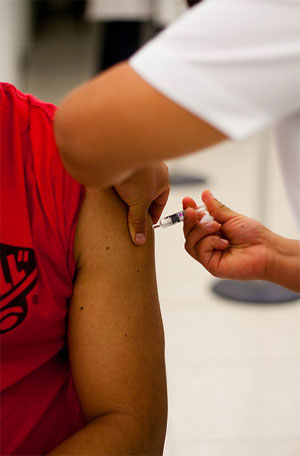 | |
| British researchers claim seasonal flu vaccinations will reduce the risk of heart attack. Photo: El Alvi. | |
The medical establishment, however, has not given up its efforts to convince people toxic vaccines are good for them.
A study published in the Canadian Medical Association Journal insists the seasonal flu vaccine reduces the risk of heart attack. In a study of almost 79,000 patients at 379 family practices in England and Wales, researchers claim annual flu vaccinations were associated with a significant drop in the rate of a first heart attack, according to the Canadian Press.
Dr. Niroshan Siriwardena, a family practitioner and a researcher at the University of Lincoln, said the study is hardly conclusive proof. “So there’s still a debate about whether this is a true link or not,” said Siriwardena, noting that the only way to confirm the results would be with randomized controlled trials, which would compare patients who get a flu shot against those given a dummy shot.
Governments frittered away billions of tax payer dollars on Big Pharma vaccinations. In the fourth quarter of 2009, one pharma monster, GlaxoSmithKline, sold $1.36 billion worth of H1N1 vaccine. By January of the following year, governments were canceling orders because people refused to take the vaccinations.
“Wall Street hucksters have nothing on Big Pharma, the CDC and the WHO, all of which conspired to mislead the public and generate irrational fear in order to make money selling people vaccine shots they never needed in the first place,” writes Mike Adams, the Health Ranger. “The drug companies raked in billions of dollars in revenues while providing a product that offered absolutely no net reduction in mortality. In fact, as the long-term side effects of the vaccines remain unknown, it could turn out that the vaccines actually result in a net increase in mortality.”
Certain brands of swine flu vaccine are linked to an increase in the rare condition narcolepsy, which causes sufferers to suddenly fall asleep at random times. In Finland, one brand — Pandemrix, manufactured by GlaxoSmithKline — was banned and officials in Sweden have started a Europe-wide investigation into the vaccine.
In India, a measles vaccination recently provided deadly when four children died after taking the drug. “Grief-stricken parents said their babies started frothing at the mouth and nose and died within 15 to 20 minutes of being administered the vaccine,” iGovernment reported. The Ministry of Heath and Family Welfare in India recalled over four million doses of the vaccine.
By October of last year, less than half of Americans said they planned to get the H1N1 vaccination. “The public’s skepticism over the vaccine has persisted despite health experts’ warning that the unpredictable H1N1 virus, which can cause very severe complications even in healthy young adults and children, has reached pandemic proportions,” NPR reported.
No pandemic occurred, thus proving that so-called health experts are more easily fooled by government and Big Pharma propaganda than the average person.
A poll conducted in September of last year revealed that most Americans would not take an H1N1 flu vaccine or an additive authorized for emergency use by the Food and Drug Administration, according to a University of Pittsburgh Graduate School of Public Health and University of Georgia study. Fewer than 10 percent of those surveyed said they would be willing to take such a vaccine and nearly 30 percent remained undecided.
By March of this year, governments were scrambling to sell the vaccines back to Big Pharma. The Dutch government tried to get GlaxoSmithKline and Novartis to buy back the vaccination. Dozens of other governments were stuck with millions of vaccines people would not take.
Millions of people refusing to be vaccinated is a problem for government. In response, the British government has decided to secretly vaccinate the population.
“The H1N1 vaccine will be mixed into the regular flu jab for OAPs, pregnant women and others at high risk,” reports News of the World. “While millions refused to take the jab during last winter’s pandemic, this time they will have no choice if they want to be protected against normal flu.”
The British government was stuck with 30 million H1N1 vaccines when the contrived pandemic fizzled out earlier this year.
—
Kurt Nimmo edits Infowars.com. He is the author of Another Day in the Empire: Life In Neoconservative America .
.
.Fresh food that lasts from eFoods Direct (Ad)
Live Superfoods
Print this page
Subscribe to:
Posts (Atom)