The libertarian Republican warns of impending disaster, reaches out to the left, and prepares for a presidential campaign.
Brian Doherty, Senior Editor
Reason
Ron Paul by now is well-known for many things, yet he remains an underrated retail politician. Paul has the extraordinary distinction of having won a seat in Congress as a nonincumbent on three separate occasions. After fighting his own Republican Party to regain a House seat in 1996 (the GOP establishment preferred a turncoat Democrat in the primary), Dr. No has won re-election in the 14th Congressional District of Texas by progressively larger margins in every campaign but one. In 2004 and 2008 the Democratic Party didn’t bother running a candidate against him. All this even though Paul eschews such fail-safe political gambits as co-sponsoring (or even voting for) spending bills that benefit his constituents and makes a point of directly challenging such modern Republican notions as an ever-expanding warfare state—all while representing what he characterizes as a Bible Belt conservative stronghold.
Paul’s newsmaking 2008 presidential run emphasized a noninterventionist foreign policy that made him anathema to the rest of his party. But those views helped inspire a ragtag, young, and surprisingly large political movement that shows few signs of dissipating three years later. Animated by this unlikely coalition, Paul’s career-long crusade to shed light on, rein in, and ultimately destroy the Federal Reserve became a mass populist cause. Provisions of his perennial “audit the Fed” bill were incorporated into a bill the House passed in 2009 (although it did not become law). To the surprise of many, after Republicans retook the House of Representatives in November 2010, he became chairman of the House Financial Services Subcommittee on Domestic Monetary Policy, which oversees the Federal Reserve.

Showing posts with label CAMPAIGN FOR LIBERTY. Show all posts
Showing posts with label CAMPAIGN FOR LIBERTY. Show all posts
Thursday, June 9, 2011
Friday, May 20, 2011

Thursday, March 10, 2011
Monday, November 15, 2010
America at War: The Missing Election Issue

Campaign for Liberty
Americans have voted, and voted for change. Real change.
Yet the most important area requiring change is one that received virtually no attention on the campaign trail: foreign policy.
No doubt, wild spending and mounting debt threaten America's fiscal future. ObamaCare will deliver worse medical care with fewer choices at higher cost. Extreme proposals for "cap and trade" could wreck the economy. Reform is needed on more than a few domestic issues.
But the U.S. is at war. Two wars, in fact. Americans are dying.
Yet virtually none of the 435 candidates elected to the House and 37 elected to the Senate on November 2 talked about either war. Former Bush aide Peter D. Feaver explained: "The big strategic consideration is that the electorate is energized over jobs, not over the war right now."
Unfortunately, "out of sight, out of mind" appears to be the motto for most Americans. Like past imperial powers, war has become both constant and largely invisible. Military personnel die and funerals are held; service men and women are injured and families suffer. But most Americans go about their lives with little sense that their government is sending fellow citizens to kill and to die in the name of the American people.
Even more blame falls on the candidates, however. They are supposed to be debating America's future. They should be offering contrasting visions of the future. They should be debating where and how the U.S. should be at war. And whether the U.S. should be at war at all.
Unfortunately, both parties are complicit in today's welfare/warfare state. President George W. Bush and the Republican Congress demonstrated that they spend money like Democrats. In their six years together the Republicans tossed money at virtually every program. They were as bad as Lyndon Johnson and the Democratic Congress when it came to upping domestic discretionary spending. In fact, the GOP-backed Medicare drug benefit was the largest expansion of the welfare state since President Johnson's "Great Society."
Read Full Article
Fresh food that lasts from eFoods Direct (Ad)
Live Superfoods
Print this page


Monday, November 1, 2010
Is Freedom a Radical Idea?

Campaign For Liberty
The answer to the question “Is freedom a radical idea” is: no and yes. Let me explain.
Starting with the “no”: Most children grow up learning the libertarian, or nonaggression, ethic. Parents say: “Don’t hit, don’t take other kids’ stuff without asking, and don’t break your promises.” Nothing radical — in the sense of out of the mainstream — there. It neatly translates into: Respect life, liberty, and property, and honor your contracts.
Most people carry these principles with them into adulthood. They avoid common-law crimes against persons and property, not because they are afraid of the cops but because criminal behavior conflicts with living the life they want to live.
Libertarianism can be seen therefore as merely a plea for the consistent application of these rules to and for everyone. It’s Spencer’s Law of Equal Liberty.
Now let’s move on to the “yes.” In the political realm, freedom has been a radical idea indeed, the exception. There the rules are different. The State — that is, certain special individuals — may “legitimately” do what you and I can’t do. If you or I kill when our lives are not in mortal danger, it is called murder. When the State does it, it is called war, or counterinsurgency, or capital punishment. If you or I, threatening force, demand money from our neighbors for their protection or to do good works, it is called robbery. When the State does it, it’s called taxation. If you or I impress someone into service against his or her will, it’s called slavery. If the State does it, it’s called conscription or national service. Etc. Etc. Etc.
Why these differences? Many reasons have been offered throughout the millennia. The State was said to be the deity’s agent on earth. It was said to embody the general will. And it was said to operate by the consent of the governed.
Regardless of the rationalization, the State, by a process of moral alchemy, or moral laundering, claims to turn bad things into good. By this ideology, rulers have kept the idea of freedom tightly contained, when it is in effect at all.
Read Full Article
Fresh food that lasts from eFoods Direct (Ad)
Live Superfoods
Print this page
Tuesday, October 12, 2010
A Spooked Economy in October

Campaign For Liberty
Last week we received worse than expected unemployment numbers, challenging recent claims that the recession has come and gone. Also, as the economy continues to suffer the after effects of the Federal Reserve-created bubbles of the last decade, there is renewed interest in gold. Fears that the Federal Reserve will pump even more money into the system had caused the price of gold to reach new highs. Also contributing to enthusiasm for gold is continued instability in the banking industry, symbolized this week by fraud allegations that have caused many banks to halt foreclosure proceedings, thus further destabilizing the housing market. Yes, October has a reputation for being a scary month economically and this month is shaping up to be frightening, as well.
The Fed has been wreaking havoc and devaluing our monetary unit steadily since 1913, and greatly accelerating it since the collapse of the Bretton Woods agreement in the 1970s. This severing of the dollar’s last tenuous link with gold allowed the Fed to create as much new money as it pleased, and it has taken full advantage of this opportunity.
In 1971, Gross Domestic Product (GDP) was $1.29 trillion. Today it is $14.6 trillion, nominally. But adjusted for all the inflating the Fed has been doing, it is only $2.73 trillion, which constitutes only a 1% real increase per year! So with all this extra money going around, we may appear nominally wealthier, but the reality is, we have barely moved at all. This is unfortunate especially for the prudent, conscientious savers, whose nest eggs are constantly being devalued. Unless of course, they have saved in something out of the Fed's reach, like gold. While the economy has basically been in a holding pattern against the leeching of wealth by the Fed for 39 years, gold has seen an inflation adjusted increase in value of over 5% per year, if measured in 1971 dollars. This is due to the Fed’s ability to make dollars plentiful. And yet, this is the only tactic the Fed can come up with to rescue an economy already devastated by "quantitative easing", as they call it.
The turmoil in the housing market demonstrates how disastrous it is to flood the economy with fiat money. Latest events with foreclosures are good examples of mistakes made in the market, in this case, by the banks, in the rush to soak up manipulated currency. This is why the truly free market depends on sound, honest money, free from false signals of artificially low interest rates.
The government finds ways to spend money even faster than the Fed can create it, bringing our national debt well past the point of the taxpayers ever being able to pay it off. Other nations who, in the past, have eagerly bought up any amount of debt we produced are now starting to resist. We are reaching a crucial point at which the dollar will no longer function, and in the absence of a functioning dollar, restoring sound money will be the only alternative.
The truly scary notion is that those in power might allow our system to collapse so chaotically to the detriment of so many people rather than simply obey the Constitution.
Fresh food that lasts from eFoods Direct (Ad)
Live Superfoods
Print this page
Tuesday, September 28, 2010
Healthcare Reform: A Huge Misdiagnosis
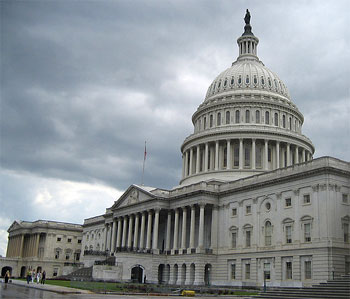 |
| Now that Congress has had six months to read the new law, there is a significant amount of buyer’s remorse on Capitol Hill. |
This week marked six months since Congress passed the healthcare reform bill in what has become all-too-typical legislative chicanery. Those in power crafted a mammoth piece of legislation and rammed it through Congress under a dire sense of emergency. Insisting on time enough to read the bill was dismissed as dangerous and crazy in a time of crisis. We were told that if we really wanted to see what was in the bill, we would have to pass it first. I cannot imagine the founding fathers intended for Congress to legislate in this manner. I would think if a Member is not absolutely certain the entire legislation meets Constitutional muster, the default vote should be “no” in accordance with our oath of office.
But now that Congress has had six months to read the new law, there is a significant amount of buyer’s remorse on Capitol Hill. The more constituents learn about the law, the more angry they become. 60% of Americans are now said to be in favor of repealing the entire thing. Unfortunately, it is much more difficult to repeal a law than to pass a bill.
I wrote a while back about the egregious provision to require businesses to issue 1099s for all transactions over $600 as a way to partially pay for it. I have cosponsored legislation to fix this issue, yet this is just the tip of the iceberg.
First of all, in spite of the administration repeating over and over that this legislation would not increase costs for Americans, they are now saying they knew all along that it would. The Congressional Budget Office (CBO) estimates that American families will see their premiums rise by an average of $2100 by 2016. The Wall Street Journal has reported that the cost of compliance is forcing some insurers to increase premiums by up to 20% as soon as next year!
Also, in spite of repeated claims from the administration that we could all keep our plans and doctors if we liked them, the administration’s own officials are now predicting that won’t be true for up to 117 million Americans who will lose their current plans. Major insurers are also dropping child-only plans because of mandates and price-fixing on such policies, leaving parents with fewer choices for their children, not more.
In addition, in spite of claiming this law would contain government costs, not increase them, administration actuaries now predict it will increase healthcare spending by over $300 billion. This additional spending comes along with doctor shortages, fewer choices and more taxes. Perhaps worst of all, increases in labor costs because of health insurance mandates are discouraging employers from hiring new workers and even triggering more layoffs.
Anyone with a basic understanding of Austrian economics could have predicted the unintended consequences of these new healthcare policies. Central planning never increases choices and quality or cuts costs as promised. Price controls and government mandates always create artificial scarcity. Healthcare is not a right, nor a privilege. It is a product, like food or clothing. As with any good or service, the free market regulation of supply and demand provides the optimum quality to the maximum number of people. Once we realize the problems we are trying to solve today were created by government intervention beginning in the 1960′s, we can begin to put patients and doctors back in control of healthcare, rather than third party oligopolies and government bureaucrats. The sooner, the better.
Fresh food that lasts from eFoods Direct (Ad)
Live Superfoods
Print this page
Wednesday, September 22, 2010
The Great Divergence: Private Investment and Government Power in the Present Crisis
 |
| Robert Higgs |
Also by Robert Higgs:
Crisis and Leviathan: Observations amid the Current Episode 05/21/10
Campaign For Liberty
Private saving and investment are the heart and soul of the dynamic market process. Together they provide and allocate the resources used to augment the economy's productive capacity, generate sustained long-run economic growth, and thereby make possible a rising level of living. Economic crises interrupt this process by discouraging investors and causing them to consume their resources or to employ them in relatively safe, low-yielding ways. Absent entrepreneurs willing to take the great risks that characterize investments in great technological and organizational innovations, the growth process fades into economic stagnation or even decline.
The present recession starkly displays this characteristic crisis-related abatement of the economy's investment process. Indeed, the decline of private investment during recent years has been much greater than most observers realize. Consider the following data, taken or derived from the most recently revised National Economic Accounts prepared by the Commerce Department's Bureau of Economic Analysis (Tables 1.1.5, 1.1.6, and 5.2.6).
In 2006, gross private domestic investment reached its most recent peak, at $2.33 trillion (in constant 2005 dollars), or 17.4 percent of GDP. After remaining almost at this level in 2007, this measure of investment fell substantially during each of the next two years, reaching $1.59 trillion, or 11.3 percent of GDP, in 2009. This decline is severe enough, but it does not give us all the information we need to gauge the extent of the investment bust.
The greater part of gross investment consists of what the statisticians call the capital consumption allowance, an estimate of the amount of money that must be spent simply to offset wear and tear and obsolescence of the existing capital stock. In a country such as the United States, with an enormous fixed capital stock built up over the centuries, a great amount of funds must be allocated simply to maintain that stock. In recent years, the private capital consumption allowance has ranged from $1.29 trillion in 2005 to $1.46 trillion (in constant 2005 dollars) in 2009. Thus, even in the boom year 2006, about 60 percent of gross private domestic investment was required merely to maintain the economy's productive capacity, leaving just 40 percent, or $889 billion in net private domestic investment, to augment that capacity.
From that level, net private domestic investment plunged during each of the following three years, taking the greatest dive between 2008 and 2009, when it fell to only $54 billion (in constant 2005 dollars), having declined altogether by 94 percent from its 2006 peak! Last year only 3.5 percent of all private investment spending went toward building up the capital stock. Thus, net private investment did not simply fall during the recession; it virtually disappeared.
Unless this drastic decline is reversed soon, the future will be bleak for the U.S. economy. Without substantial net private investment, brisk economic growth is unthinkable beyond the very short run. Although private investment spending has recovered somewhat since it reached its trough in the third quarter of 2009, gross private domestic investment in the most recent quarter (April to June) of 2010 remained 21 percent below its peak in the first quarter of 2006, and net private domestic investment remained about 64 percent below its previous peak.
While this private-sector disaster was occurring, however, the government sector of the economy was booming. The ratio of all federal government spending -- purchases of goods and services plus transfer payments -- to GDP increased from 20.6 percent in the fourth (October to December) quarter of 2007 to 25.4 percent in the most recent (April to June) quarter of 2010.
Of this increase, about 73 percent represents an increase in transfer payments. According to the National Economic Accounts (Table 3.2), federal transfer payments for social benefits to persons -- old-age pensions, unemployment-insurance benefits, disability-insurance benefits, Medicare benefits, and so forth in great variety -- increased from a seasonally adjusted annual rate of $1.28 trillion in the fourth quarter of 2007 to $1.72 trillion in the second quarter of 2010 — a leap of more than one-third in only two and a half years. During the same period, government grants-in-aid to state and local governments rose from a seasonally adjusted annual rate of $382 billion to $525 billion, an increase of more than 37 percent.
Data compiled by the Bureau of Labor Statistics show that the number of private nonfarm employees fell from 114.1 million in 2006 to 108.4 in 2009, and even further this year, reaching 107.9 million in August 2010. At the same time, the number of government employees at all levels increased from 22.0 million in 2006 to 22.5 million in 2009, although a slight reduction has occurred recently, putting the number at 22.4 million in August 2010.
The Federal Reserve System has played a major role during the current recession, acting in unprecedented ways to inject funds into the financial system in general and into selected failing firms in particular, especially AIG, Fannie Mae, and Freddie Mac, which have been effectively taken over by the government, giving rise to a situation in which the government supplies or insures about nine-tenths of all new residential mortgage loans. Before the recession, the Fed's financial assets consisted overwhelmingly of U.S. Treasury securities. It now holds a variety of securities, including mortgage-backed securities valued on the Fed's books at approximately $1.1 trillion. In this way, the Fed has become the major direct source of funds for the government-sponsored enterprises that provided an inviting secondary market for the commercial banks and other primary lenders that inflated the housing bubble.
Through the TARP scheme, created late in 2008, the U.S. Treasury acquired ownership stakes in hundreds of commercial banks.
Of course, the government also took over General Motors and Chrysler, bypassing existing bankruptcy laws and ramming into place restructuring arrangements that served the Obama administration's political goals, especially its support for members (active and retired) of the United Auto Workers.
The foregoing measures constitute only a small fraction of the many significant actions the federal government has taken to augment its size, scope, and power during the current recession. Thus, while the market system's driving force -- private investment -- was being brought to its knees, the government's crisis-driven surge only added an additional discouraging feature to those operating though market channels, such as the reluctance of commercial banks to make new loans and investments and the desire of households to repay debts and increase their holdings of cash balances. A government growing in so many different directions at once, with many additional initiatives -- such as higher tax rates, new taxes on energy use, and new restrictions on financial service providers -- still awaiting enactment or regulatory specification, creates tremendous uncertainty for anyone contemplating a long-term investment: who knows what the contours of future government exactions, restrictions, and requirements will be, and hence whether a particular investment will prove to be profitable or not?
Therefore, a major consequence of the Great Divergence — the starvation of private investment and the feasting of government -- is what I call regime uncertainty. This form of uncertainty is a pervasive incalculable apprehension about the future security of private property rights in capital and the income it yields to investors; indeed, a pervasive apprehension that extends beyond investors to include nearly all private participants in the economy — consumers, workers, and managers, as well as investors -- in regard to the future economic order. The Great Divergence in itself is very bad news. Its effects in enhancing regime uncertainty only make it more unfortunate for everyone outside the privileged precincts of government.
Robert Higgs [send him mail] is senior fellow in political economy at the Independent Institute and editor of The Independent Review. He is also a columnist for LewRockwell.com. His most recent book is Neither Liberty Nor Safety: Fear, Ideology, and the Growth of Government
 . He is also the author of Depression, War, and Cold War: Studies in Political Economy
 , Resurgence of the Warfare State: The Crisis Since 9/11
 and Against Leviathan: Government Power and a Free Society.
Fresh food that lasts from eFoods Direct (Ad)
Live Superfoods
Print this page
Wednesday, September 8, 2010
Statism Left, Right and Center
By Murray Rothbard
Campaign For Liberty
[Reprinted from Libertarian Review, 1979.]
"Left," "Right," and "center" have increasingly become meaningless categories. Libertarians know that their creed can and does attract people from all parts of the old, obsolete ideological spectrum. As consistent adherents of individual liberty in all aspects of life, we can attract liberals by our devotion to civil liberty and a noninterventionist foreign policy, and conservatives by our adherence to property rights and the free market. But what about the other side of the coin? What about authoritarianism and statism across the board?
For a long while it has been clear that statists, right, left, and center, have been growing more and more alike -- that their common devotion to the State has transcended their minor differences in style. In the last decade, all of them have been coagulating into the center, until the differences among "responsible" conservatives, right-wing Social Democrats, neoconservatives, and even such democratic socialists as John Kenneth Galbraith and Robert Heilbroner, have become increasingly difficult to fathom.
The common creed central to all these groupings is support for, and aggrandizement of, the American State, at home and abroad. Abroad, this means support for ever-greater military budgets, for FBI and CIA terrorism, for a foreign policy of global intervention, and absolute backing for the State of Israel. Domestically there are variations, but a general agreement holds that government should not undertake more than it can achieve: in short, a continued, but more efficiently streamlined welfare state. All this is bolstered by an antilibertarian policy on personal freedom, advancing the notion, for either religious or secular reasons, that the State is the proper vehicle for coercively imposing what these people believe to be correct moral principles.
This coalition of statists has been fusing for some years; but recently a new outburst of candor has let many cats out of the proverbial bag. It all began in the summer 1978 issue of the socialist magazine Dissent, edited by ex-Trotskyist Irving Howe. A lead article by the best-selling economist Robert Heilbroner says flat out that socialists should no longer try to peddle the nostrum that central planning in the socialist world of the future will be cojoined with personal freedom, with civil liberties and freedom of speech.
No, says Heilbroner, socialists must face the fact that socialism will have to be authoritarian in order to enforce the dictates of central planning, and will have to be grounded on a "collective morality" enforced upon the public. In short, we cannot, in Heilbroner's words, have "a socialist cake with bourgeois icing," -- that is, with the preservation of personal freedom.
An intriguing reaction to the Heilbroner piece comes from the right wing. For years, a controversy once raged amidst the intellectual circles on the right between the "traditionalists," who made no pretense about interest in liberty or individual rights; the libertarians, who have long since abandoned the right wing; and the "fusionists," led by the late Frank Meyer, who tried to fuse the two positions into a unified amalgam. Both the "trads" and libertarians realized early that the two positions were not only inconsistent but diametrically opposed.
In recent years, the trads have been winning out over the fusionists in the conservative camp, as the conservatives have sidled up more eagerly to power. Now, Dale Vree, a regular columnist for National Review, takes the opportunity to hail the Heilbroner article and to call for a mighty right-left coalition on behalf of statism ("Against Socialist Fusionism," National Review, December 8, 1978, p. 1547). He also slaps at the fusionists by pointing out that the "socialist fusionists," those trying to fuse economic collectivism with cultural individualism, necessarily suffer from the same inconsistencies as their counterparts on the right wing, who have tried to join economic individualism with cultural collectivism.
Vree writes,
He then applauds Heilbroner's decrying capitalism because it has "no sense of 'the good'" and permits "consenting adults" to do anything they please. Reacting in horror from this picture of freedom and diversity, Vree writes, "But, Heilbroner says alluringly, because a socialist society must have a sense of "'the good' not everything will be permitted."
To Vree, it is impossible "to have economic collectivism along with cultural individualism" or vice versa, and so he is happy, like his left-wing counterpart Heilbroner, to opt for collectivism across the board. He concludes by noting the fusion of "right-wing" and "left-wing" libertarianism, and then he calls for a counterfusion on behalf of statism:
The Buckleys, the Burnhams and their ilk have been scrambling for such an embrace for a long time -- at least in practice. All that is left is the open and candid admission that this is what has been going on.
A new polarization, a new ideological spectrum, is fast taking shape. Big government, coercion, statism -- or individual rights, liberty, and voluntarism, across the board, in every facet of American life.
The lines are getting drawn with increasing clarity. Statism vs. liberty. Us or them.
Live Superfoods It is time to Wake Up! You too, can join the "Global Political Awakening"!
Campaign For Liberty
[Reprinted from Libertarian Review, 1979.]
 |
Murray N. Rothbard (1926—1995), the great Austrian economist, economic historian, and libertarian political philosopher, was the author of Man, Economy, and State , Conceived in Liberty , Conceived in Liberty ,What Has Government Done to Our Money ,What Has Government Done to Our Money , For a New Liberty , For a New Liberty , America's Great Depression , America's Great Depression , The Case Against the Fed , The Case Against the Fed , and many other books and articles. See Rothbard's LewRockwell.com library and his resources at the Mises Institute. , and many other books and articles. See Rothbard's LewRockwell.com library and his resources at the Mises Institute. |
For a long while it has been clear that statists, right, left, and center, have been growing more and more alike -- that their common devotion to the State has transcended their minor differences in style. In the last decade, all of them have been coagulating into the center, until the differences among "responsible" conservatives, right-wing Social Democrats, neoconservatives, and even such democratic socialists as John Kenneth Galbraith and Robert Heilbroner, have become increasingly difficult to fathom.
The common creed central to all these groupings is support for, and aggrandizement of, the American State, at home and abroad. Abroad, this means support for ever-greater military budgets, for FBI and CIA terrorism, for a foreign policy of global intervention, and absolute backing for the State of Israel. Domestically there are variations, but a general agreement holds that government should not undertake more than it can achieve: in short, a continued, but more efficiently streamlined welfare state. All this is bolstered by an antilibertarian policy on personal freedom, advancing the notion, for either religious or secular reasons, that the State is the proper vehicle for coercively imposing what these people believe to be correct moral principles.
This coalition of statists has been fusing for some years; but recently a new outburst of candor has let many cats out of the proverbial bag. It all began in the summer 1978 issue of the socialist magazine Dissent, edited by ex-Trotskyist Irving Howe. A lead article by the best-selling economist Robert Heilbroner says flat out that socialists should no longer try to peddle the nostrum that central planning in the socialist world of the future will be cojoined with personal freedom, with civil liberties and freedom of speech.
No, says Heilbroner, socialists must face the fact that socialism will have to be authoritarian in order to enforce the dictates of central planning, and will have to be grounded on a "collective morality" enforced upon the public. In short, we cannot, in Heilbroner's words, have "a socialist cake with bourgeois icing," -- that is, with the preservation of personal freedom.
An intriguing reaction to the Heilbroner piece comes from the right wing. For years, a controversy once raged amidst the intellectual circles on the right between the "traditionalists," who made no pretense about interest in liberty or individual rights; the libertarians, who have long since abandoned the right wing; and the "fusionists," led by the late Frank Meyer, who tried to fuse the two positions into a unified amalgam. Both the "trads" and libertarians realized early that the two positions were not only inconsistent but diametrically opposed.
In recent years, the trads have been winning out over the fusionists in the conservative camp, as the conservatives have sidled up more eagerly to power. Now, Dale Vree, a regular columnist for National Review, takes the opportunity to hail the Heilbroner article and to call for a mighty right-left coalition on behalf of statism ("Against Socialist Fusionism," National Review, December 8, 1978, p. 1547). He also slaps at the fusionists by pointing out that the "socialist fusionists," those trying to fuse economic collectivism with cultural individualism, necessarily suffer from the same inconsistencies as their counterparts on the right wing, who have tried to join economic individualism with cultural collectivism.
Vree writes,
Heilbroner is also saying what many contributors to NR have said over the last quarter century: you can't have both freedom and virtue. Take note, traditionalists. Despite his dissonant terminology, Heilbroner is interested in the same thing you're interested in: virtue."But Vree's enthusiasm for the authoritarian socialist does not stop there. He is also intrigued with the Heilbroner view that a socialist culture must "foster the primacy of the collectivity" rather than the "primacy of the individual." Moreover, he is happy to applaud Heilbroner's lauding of the alleged "moral" and "spiritual" focus of socialism as against "bourgeois materialism." Vree quotes Heilbroner, "Bourgeois culture is focused on the material achievement of the individual. Socialist culture must focus on his or her moral or spiritual achievement." Vree then adds, "There is a traditional ring to that statement." And how!
He then applauds Heilbroner's decrying capitalism because it has "no sense of 'the good'" and permits "consenting adults" to do anything they please. Reacting in horror from this picture of freedom and diversity, Vree writes, "But, Heilbroner says alluringly, because a socialist society must have a sense of "'the good' not everything will be permitted."
To Vree, it is impossible "to have economic collectivism along with cultural individualism" or vice versa, and so he is happy, like his left-wing counterpart Heilbroner, to opt for collectivism across the board. He concludes by noting the fusion of "right-wing" and "left-wing" libertarianism, and then he calls for a counterfusion on behalf of statism:
Several mavericks have been busy fusing right-wing libertarianism with left-wing libertarianism (anarchism). If the writings of such different socialists as Robert Heilbroner, Christopher Lasch, Morris Janowitz, Midge Decter, and Daniel Bell are indicative of a tendency, we may see the rise of a socialist traditionalist fusionism. One wonders if America contains any "Tory Socialists" on the right side of its aisle who will go out to embrace them.The whopping error in that paragraph is that one doesn't have to wonder for a moment.
The Buckleys, the Burnhams and their ilk have been scrambling for such an embrace for a long time -- at least in practice. All that is left is the open and candid admission that this is what has been going on.
A new polarization, a new ideological spectrum, is fast taking shape. Big government, coercion, statism -- or individual rights, liberty, and voluntarism, across the board, in every facet of American life.
The lines are getting drawn with increasing clarity. Statism vs. liberty. Us or them.
Live Superfoods
Subscribe to:
Posts (Atom)