Global Water Shortage Looms In New Century
When most U.S. citizens think about water shortages — if they think about them at all — they think about a local problem, possibly in their town or city, maybe their state or region. We don't usually regard such problems as particularly worrisome, sharing confidence that the situation will be readily handled by investment in infrastructure, conservation, or other management strategies. Whatever water feuds arise, e.g., between Arizona and California, we expect to be resolved through negotiations or in the courtroom.
But shift from a local to a global water perspective, and the terms dramatically change. The World Bank reports that 80 countries now have water shortages that threaten health and economies while 40 percent of the world — more than 2 billion people — have no access to clean water or sanitation. In this context, we cannot expect water conflicts to always be amenably resolved.
Book Says Irrigation Miracle Ending
Sandra Postel's book, "Pillar of Sand: Can the Irrigation Miracle Last?", explores 8,000 years of irrigation history and discusses whether irrigation can feasiblely be used to feed the world's population as it approaches seven billion. The dramatic increase in population is accompanied by depletion of groundwater supplies, inadequacy of surface water supplies, salination of land, and conversion of agricultural land to other uses. None of these developments is conducive to irrigated agriculture. Meanwhile growers maintain the status quo because it is uneconomical to invest in major new water schemes. According to the author the problem of food supply will not be solved by increasing agriculture acreage or productivity since water is the limiting factor. The book includes many charts and graphs that show increases in irrigated acreage, changes in water supplies, etc.
Consider: More than a dozen nations receive most of their water from rivers that cross borders of neighboring countries viewed as hostile. These include Botswana, Bulgaria, Cambodia, the Congo, Gambia, the Sudan, and Syria, all of whom receive 75 percent or more of their fresh water from the river flow of often hostile upstream neighbors.
In the Middle East, a region marked by hostility between nations, obtaining adequate water supplies is a high political priority. For example, water has been a contentious issue in recent negotiations between Israel and Syria. In recent years, Iraq, Syria and Turkey have exchanged verbal threats over their use of shared rivers. (It should come as no surprise to learn that the words "river" and "rival" share the same Latin root; a rival is "someone who shares the same stream.")
More frequently water is being likened to another resource that quickened global tensions when its supplies were threatened. A story in The Financial Times of London began: "Water, like energy in the late 1970s, will probably become the most critical natural resource issue facing most parts of the world by the start of the next century." This analogy is also reflected in the oft-repeated observation that water will likely replace oil as a future cause of war between nations.
Global water problems are attracting increasing attention, not just at the international level, but also within the United States, in its popular press, in natural resource journals and as the subject of books. Former Sen. Paul Simon from Illinois recently authored Tapped Out: The Coming World Crisis in Water and What We Can Do About it. A book for the general, non-specialized audience, Simon's publication sounds an alarm about the approaching crisis. "Within a few years, a water crisis of catastrophic proportions will explode upon us — unless aroused citizens ... demand of their leadership actions reflecting vision, understanding and courage."
A prime cause of the global water concern is the ever-increasing world population. As populations grow, industrial, agricultural and individual water demands escalate. According to the World Bank, world-wide demand for water is doubling every 21 years, more in some regions. Water supply cannot remotely keep pace with demand, as populations soar and cities explode.
Population growth alone does not account for increased water demand. Since 1900, there has been a six-fold increase in water use for only a two-fold increase in population size. This reflects greater water usage associated with rising standards of living (e.g., diets containing less grain and more meat). It also reflects potentially unsustainable levels of irrigated agriculture. (See sidebar.) World population has recently reached six billion and United Nation's projections indicate nine billion by 2050. What water supplies will be available for this expanding population?
Meanwhile many countries suffer accelerating desertification. Water quality is deteriorating in many areas of the developing world as population increases and salinity caused by industrial farming and over-extraction rises. About 95 percent of the world's cities still dump raw sewage into their waters.
Climate change represents a wild card in this developing scenario. If, in fact, climate change is occurring — and most experts now concur that it is — what effect will it have on water resources? Some experts claim climate change has the potential to worsen an already gloomy situation. With higher temperatures and more rapid melting of winter snowpacks, less water supplies will be available to farms and cities during summer months when demand is high..
A technological solution that some believe would provide ample supplies of additional water resources is desalination. Some researchers fault the United States for not providing more support for desalination research. Once the world leader in such research, this country has abdicated its role, to Saudi Arabia, Israel and Japan. There are approximately 11,000 desalination plants in 120 nations in the world, 60 percent of them in the Middle East.
Others argue that a market approach to water management would help resolve the situation by putting matters on a businesslike footing. They say such an approach would help mitigate the political and security tensions that exacerbate international affairs. For example, the Harvard Middle East Water Project wants to assign a value to water, rather than treat rivers and streams as some kind of free natural commodity, like air.
Other strategies to confront the growing global water problem include slowing population growth, reducing pollution, better management of present supply and demand and, of course, not to be overlooked, water conservation. As Sandra Postel writes in her book, Last Oasis, "Doing more with less is the first and easiest step along the path toward water security."
Ultimately, however, an awareness of the global water crisis should serve to put our own water concerns in perspective. Whether our current activity is evaluating Arizona's Ground Water Management Act or, at a more personal level, deciding whether to plant water-conserving vegetation, the wiser choice would likely be made, if guided by an awareness that water is a very scarce and valuable natural resource.
READ FULL ARTICLE

Showing posts with label WATER SHORTAGE. Show all posts
Showing posts with label WATER SHORTAGE. Show all posts
Saturday, August 7, 2010
Saturday, July 31, 2010
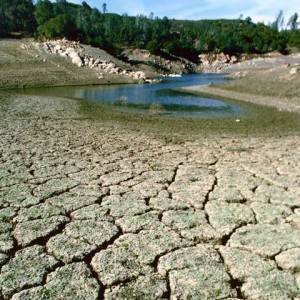
Water Shortage!
Water Shortage!
Ever since the beginning of this nation, Americans have always been able to take for granted that there would always be plenty of fresh water. But unfortunately that is rapidly changing. Due to pollution, corruption, inefficiency and the never ending greed of the global elite, the United States (and the entire world) is heading for a very serious water shortage. Already, there are some areas of the United States where water is the number one local political issue. In fact, water is becoming so scarce in certain areas that some states are actually battling in court over it. Unfortunately, there is every indication that the worldwide water crisis is about to get a lot worse.
According to a new report released by the Natural Resources Defense Council,more than one-third of all counties in the lower 48 states will likely be facing very serious water shortages by 2050. That is just 40 years away. As water becomes more scarce and as big global corporations lock up available supplies, the price of water is almost certainly going to skyrocket. This will put even more economic pressure on average Americans.
And Americans certainly do use a lot of water. According to CBS News, the average American uses 150 gallons of water per day, while residents of the U.K. only use 40 gallons per day and residents of China use just 22 gallons per day.
In fact, a five minute shower by an American uses more water than a typical person living in poverty in a developing country uses in an entire day.
For hundreds of years, North America has been blessed with an overabundance of fresh water, but those supplies are quickly running dry.
In fact, there are some scientists who are now wondering if we might actually see a return of the "Dust Bowl" days. The Ogallala Aquifer, a massive underground lake that stretches from southern South Dakota to northern Texas, is being drained at a staggering pace, and that means that the Great Plains could soon turn into the Great American Desert.
If the breadbasket of America were to dry up, what would that mean for the future of this nation?
But it is not just the Great Plains that is on the verge of a major water crisis.
The following is an excerpt from an article that I authored recently for another website....
-----
*The number of states facing a water crisis is now far greater than the number of states without one. In fact, a total of 36 states face severe water shortages in the next three years.
*A federal judge recently ruled that Georgia has few legal rights to Lake Lanier - the main water supply for Atlanta. With 2 million more residents expected to move into Atlanta over the next couple of decades, officials there are scrambling to try to figure out how in the world everyone is going to be able to have enough water.
*In Texas, farmers and ranchers were absolutely devastated in 2009 as the ongoing drought cost the agricultural sector billions of dollars.
*Every single day Arizona and parts of New Mexico use 300 million gallons more water than they get in renewable supply.
*Lake Mead is the primary supply of water for the city of Las Vegas. But since 1998, Lake Mead's capacity has plunged by more than 50 percent- down 5.6 trillion gallons. Nobody is quite sure how Las Vegas is going to continue to have enough water.
*The water crisis became so serious in California this past year that Barack Obama actually requested that California Governor Arnold Schwarzenegger call state lawmakers into a special session just to deal with the situation.
*Other states are so concerned about the national water crisis that they are determined to hold on to the supplies that they have. In fact, 8 states surrounding the Great Lakes have signed a pact banning the export of water to outsiders - even to other U.S. states.
-----
The truth is that fresh water is very rapidly becoming one of the most valuable commodities in the world. All over the globe, big global corporations are gobbling up water rights as fast as they can.
Why?
Well, the truth is that the world is on the verge of a water shortage of unprecedented magnitude....
*Worldwide demand for fresh water tripled during the last century, and is now doubling every 21 years.
*According to USAID, one-third of all humans will face severe or chronic water shortages by the year 2025.
*Of the 60 million people added to the world’s cities every year, the vast majority of them live in impoverished slums and shanty-towns with no sanitation facilities whatsoever.
*It is estimated that 75 percent of India's surface water is now contaminated by human and agricultural waste.
*Not only that, but according to a UN study on sanitation, far more people in India have access to a mobile phone than to a toilet.
*In northern China, the water table is dropping one meter per year due to overpumping.
*But there are few places where the water shortage is as severe as it is in the Middle East. Saudi Arabia had been producing enough wheat to be self-sufficient for most of the past 30 years, but in 2008 authorities there realized that the non-replenishable aquifer they had been pumping for irrigation purposes was nearly depleted. So in response Saudi Arabia made the decision to reduce their wheat harvest by one-eighth every year thereafter. Wheat production in Saudi Arabia is scheduled to cease entirely in 2016.
The truth is that it would be very difficult to understate just how bad the world water crisis is becoming.
The following is a list of mind blowing facts about the world's water crisis that respected water expert Maude Barlow shares during her presentations....
-Every eight seconds a child dies from drinking dirty water.
-A new desert the size of Rhode Island is created in China because of drought every single year.
-In the developing world, 90% of waste water is discharged completely untreated into local rivers.
-By the year 2050, 1.7 billion people will live in "dire water poverty" and will be forced to relocate.
-Half of the world's hospital beds are occupied by people who have contracted waterborne diseases.
-The World Health Organization says contaminated water is the cause of 80% of all sickness and disease worldwide.
-In China, 80% of the major rivers are so polluted they don't support aquatic life at all.
-The women of South Africa collectively walk the equivalent distance to the moon and back 16 times a day for water.
Without fresh water we cannot live, and global supplies are rapidly being depleted.
Meanwhile, the global elite are running around and are gobbling up the rights to as much of the water around the world as they can.
When you put all the facts above together, it all adds up to one very troubling picture.
Right now it is more imperative than ever to make certain that you and your family have a reliable source of clean water for the times that are coming. Clean, fresh water is something that none of us can take for granted any longer.
So what do you think of the coming global water shortage? Feel free to leave a comment with your opinion....

Subscribe to:
Posts (Atom)