

Showing posts with label longterm unemployment. Show all posts
Showing posts with label longterm unemployment. Show all posts
Monday, May 30, 2011
Friday, April 1, 2011
We've Become a Nation of Takers, Not Makers
More Americans work for the government than in manufacturing, farming, fishing, forestry, mining and utilities combined.
Stephen Moore
Wall Street Journal
If you want to understand better why so many states—from New York to Wisconsin to California—are teetering on the brink of bankruptcy, consider this depressing statistic: Today in America there are nearly twice as many people working for the government (22.5 million) than in all of manufacturing (11.5 million). This is an almost exact reversal of the situation in 1960, when there were 15 million workers in manufacturing and 8.7 million collecting a paycheck from the government.
It gets worse. More Americans work for the government than work in construction, farming, fishing, forestry, manufacturing, mining and utilities combined. We have moved decisively from a nation of makers to a nation of takers. Nearly half of the $2.2 trillion cost of state and local governments is the $1 trillion-a-year tab for pay and benefits of state and local employees. Is it any wonder that so many states and cities cannot pay their bills?
Every state in America today except for two—Indiana and Wisconsin—has more government workers on the payroll than people manufacturing industrial goods. Consider California, which has the highest budget deficit in the history of the states. The not-so Golden State now has an incredible 2.4 million government employees—twice as many as people at work in manufacturing. New Jersey has just under two-and-a-half as many government employees as manufacturers. Florida's ratio is more than 3 to 1. So is New York's.
Read Full Article
 |
| Census Worker AFP File image |
Wall Street Journal
If you want to understand better why so many states—from New York to Wisconsin to California—are teetering on the brink of bankruptcy, consider this depressing statistic: Today in America there are nearly twice as many people working for the government (22.5 million) than in all of manufacturing (11.5 million). This is an almost exact reversal of the situation in 1960, when there were 15 million workers in manufacturing and 8.7 million collecting a paycheck from the government.
It gets worse. More Americans work for the government than work in construction, farming, fishing, forestry, manufacturing, mining and utilities combined. We have moved decisively from a nation of makers to a nation of takers. Nearly half of the $2.2 trillion cost of state and local governments is the $1 trillion-a-year tab for pay and benefits of state and local employees. Is it any wonder that so many states and cities cannot pay their bills?
Every state in America today except for two—Indiana and Wisconsin—has more government workers on the payroll than people manufacturing industrial goods. Consider California, which has the highest budget deficit in the history of the states. The not-so Golden State now has an incredible 2.4 million government employees—twice as many as people at work in manufacturing. New Jersey has just under two-and-a-half as many government employees as manufacturers. Florida's ratio is more than 3 to 1. So is New York's.
Read Full Article

Monday, January 17, 2011
Friday, December 3, 2010
Unemployment rises to 9.8%, only 39,000 jobs gained ? The Truth about Unemployment Statistics
Global Political Awakening
The unemployment rate edged closer to double digits in November according to the new release from the Bureau of Labor Statistics, moving up two tenths of a point to 9.8%. The private sector showed disappointing results, gaining only 39,000 jobs after a report yesterday from ADP suggested much higher gains. A drop in retail employment suggests an ominous trend for this holiday season:
The unemployment rate edged up to 9.8 percent in November, and non farm payroll employment was little changed (+39,000), the U.S. Bureau of Labor Statistics reported today. Temporary help services and health care continued to add jobs over the month, while employment fell in retail trade. Employment in most major industries changed little in November. …Among the unemployed, the number of job losers and persons who completed temporary jobs rose by 390,000 to 9.5 million in November. The number of long-term unemployed (those jobless for 27 weeks and over) was little changed at 6.3 million and accounted for 41.9 percent of the unemployed. (See tables A-11 and A-12.)The civilian labor force participation rate held at 64.5 percent in November, and the employment-population ratio was essentially unchanged at 58.2 percent. (See table A-1.)The number of persons employed part time for economic reasons (sometimes referred to as involuntary part-time workers) was little changed over the month at 9.0 million. These individuals were working part time because their hours had been cut back or because they were unable to find a full-time job. (See table A-8.)About 2.5 million persons were marginally attached to the labor force in November, up from 2.3 million a year earlier. (The data are not seasonally adjusted.) These individuals were not in the labor force, wanted and were available for work, and had looked for a job sometime in the prior 12 months. They were not counted as unemployed because they had not searched for work in the 4 weeks preceding the survey. (See table A-16.)Among the marginally attached, there were 1.3 million discouraged workers in November, an increase of 421,000 from a year earlier. (The data are not seasonally adjusted.) Discouraged workers are persons not currently looking for work because they believe no jobs are available for them. The remaining 1.2 million persons marginally attached to the labor force had not searched for work in the 4 weeks preceding the survey for reasons such as school attendance or family responsibilities. (See table A-16.)
Department stores lost 9,000 jobs, and furniture and home furnishings stores lost 5,000. The latter may be part of the fallout from poor performance in home sales as well as weakness in retail sales. Manufacturing dropped 13,000 jobs. Wage growth was also flat in November across the board.
The increase in the overall rate appears linked directly to job losses rather than a return to the workforce of discouraged workers. Those numbers have actually increased slightly year on year. When they begin entering the workforce again, the overall rate will rise even higher, even if the overall job creation numbers improve. That isn’t what happened in November.
Update: Reuters reports that the numbers were, well ….
U.S. employment increased far less than expected in November and the jobless rate jumped to a seven-month high of 9.8 percent, dampening hopes for a self-sustaining economic recovery.Non farm payrolls rose 39,000, with private hiring gaining only 50,000, the Labor Department said. However, overall employment for September and October was revised to show 38,000 more jobs than previously estimated.Economists had expected payrolls to increase 140,000 last month and the unemployment rate to be unchanged at 9.6 percent.
To be fair, I also expected similar numbers after seeing the ADP report yesterday; I was thinking closer to +150K and 9.6%. Also, I changed the headline for accuracy, as overall employment increased by 39,000 jobs, but the private sector added 50,000; the difference came in reductions in government jobs.
Of course, we should be wary of any employment numbers reported by the U.S. Department of Labor. The government crunches numbers whereby 2+2 does not always equal 4!
According to a July 16, 2010 report in Daily Finance entitled "The Jobless Effect: Is the Real Unemployment Rate...16.5%, 22% or ?":
Raghavan Mayur, president at TechnoMetrica Market Intelligence, follows unemployment date closely. So, when his survey for May revealed that 28% of the 1,000-odd households surveyed reported that at least one member was looking for a full-time job, he was flummoxed.
"Our numbers are always very accurate, so I was surprised at the discrepancy with he government's numbers," says Mayur, whose firm owns the TIPP polling unit, a polling partner for Investor' Business Daily and Christian Science Monitor. After all, the headline number shows the U.S. unemployment rate today is 9.5% with a total of 14.6 million jobless people.
However, Mayur's polls continued to find much worse figures. The June poll turned up 27.8% of households with a t least one member who's unemployed and looking for a job, while the latest poll conducted in the second week of July showed 28.6% in that situation. That translates to an unemployment rate of over 22%, says Mayur, who has started questioning the accuracy of the Labor Departments' jobless numbers.
Even Austan Goolsbee Has Been Skeptical
Mayur isn't alone in harboring such doubts, nor is he the first to wonder about inaccuracies. For years, many economists have pointed to evidence that the government data under counts the unemployed. Economist Helen Ginsbug, co-founder of advocacy group National Jobs for All Coalition, and John Williams of the newsletter Shadow Government Statistics have been questioning these numbers for years.
In fact, Austan Goolsbee, who is now part of the White House Council of Economic Advisers, wrote in a 2003 New York Times piece titled "The Unemployed Myth," that the government had "cooked the books" by not correctly counting all the people it should, thereby keeping the unemployment rate artificially low. At the time, Goolsbee was a professor at the University of Chicago. when asked whether Goolsbee still believes the government under counts unemployment, a White House spokeswoman said Goolsbee wasn't available to comment.
Such under counting of unemployment can be an onerously dangerous exercise today. It could lead to some lawmakers underestimating the gravity of the labor market's problems and base their policy making on a far-less-grim picture than actually exists. Economically, and socially, that would make a bad situation much worse for America.
"The implications of such under counting is that policymakers aren't going to be thinking as big as they should be," says Ginsbug, also a professor emeritus of economics at Brooklyn College. "It also means that [consumer] demand is not going to be there, because the income from people who are employed isn't going tot be there."
Indeed, it will add additional stress to an already strained economy. Businesses that might start ramping up after seeing the jobless number drop could set themselves up for disappointment when customers don't appear or orders don't flow in (Read Full Report).
"If you tell a big enough lie and tell it frequently enough, it will be believed."
— Adolf Hitler
— Adolf Hitler
"Everything the State says is a lie, and everything it has it has stolen."
— Friedrich Nietzsche
— Friedrich Nietzsche
"I'm not upset that you lied to me, I'm upset that from now on I can't believe you."
— Friedrich Nietzsche
— Friedrich Nietzsche
"It is better to offer no excuse than a bad one."
— George Washington
"I have a higher and grander standard of principle than George Washington. He could not lie; I can, but I won't."
— Mark Twain
"When it comes to controlling human beings there is no better instrument than lies. Because, you see, humans live by beliefs. And beliefs can be manipulated. The power to manipulate beliefs is the only thing that counts."
— Michael Ende (The Neverending Story)
"The men the American people admire most extravagantly are the most daring liars; the men they detest most violently are those who try to tell them the truth."-H. L. Mencken
“They made us many promises, more than I can remember. They only kept but one. They promised they would take our land, and they took it.” ----Red Cloud
Fresh food that lasts from eFoods Direct (Ad)

Wednesday, December 1, 2010
Bernanke: Long-Term Unemployment Has SEVERE 'Social Consequences'

Reuters
NEW YORK -- Federal Reserve Chairman Ben Bernanke warned on Tuesday that a long period of high unemployment could exact a steep social cost, as he and other Fed officials defended the central bank against criticism of its easy money policy.
Minneapolis Fed President Narayana Kocherlakota said the Fed's controversial bond purchase program was needed given a "troubling" slowdown in U.S. economic growth and too low inflation and employment.
The Fed said earlier this month it would buy $600 billion in Treasury bonds to support a weak economy. Core inflation has averaged well below the Fed's informal target of about 2 percent and the jobless rate remains stubbornly high.
"There are obviously very severe economic and social consequences from this level of unemployment," Bernanke said at Ohio State University. "So getting new jobs, getting unemployment down is of an incredible importance."
Read Full Article
RELATED ARTICLE:
2 million lose jobless benefits as holidays arrive
Fresh food that lasts from eFoods Direct (Ad)
Live Superfoods
Print this page
2 million lose jobless benefits as holidays arrive

Associated Press
Extended unemployment benefits for nearly 2 million Americans begin to run out Wednesday, cutting off a steady stream of income and guaranteeing a dismal holiday season for people already struggling with bills they cannot pay.
Unless Congress changes its mind, benefits that had been extended up to 99 weeks will end this month.
That means Christmas is out of the question for Wayne Pittman, 46, of Lawrenceville, Ga., and his wife and 9-year-old son. The carpenter was working up to 80 hours a week at the beginning of the decade, but saw that gradually drop to 15 hours before it dried up completely. His last $297 check will go to necessities, not presents
"I have a little boy, and that's kind of hard to explain to him," Pittman said.
The average weekly unemployment benefit in the U.S. is $302.90, though it varies widely depending on how states calculate the payment. Because of supplemental state programs and other factors, it's hard to know for sure who will lose their benefits at any given time. But the Labor Department estimates that, without a Congress-approved extension, about 2 million people will be cut off by Christmas.
Congressional opponents of extending the benefits beyond this month say fiscal responsibility should come first. Republicans in the House and Senate, along with a handful of conservative Democrats, say they're open to extending benefits, but not if it means adding to the $13.8 trillion national debt.
Even if Congress does lengthen benefits, cash assistance is at best a stopgap measure, said Carol Hardison, executive director of Crisis Assistance Ministry in Charlotte, N.C., which has seen 20,000 new clients since the Great Recession started in December 2007.
"We're going to have to have a new conversation with the people who are still suffering, about the potentially drastic changes they're going to have to make to stay out of the homeless shelter," she said.
Forget Christmas presents. What the so-called "99ers" want most of all is what remains elusive in the worst economy in generations: a job.
Read Full Article
RELATED ARTICLE:
CEOs Blame Consumer Class for Joblessness
Fresh food that lasts from eFoods Direct (Ad)
Live Superfoods
Print this page
Tuesday, November 9, 2010
The REAL Unemployment Rate Is 22%
The Daily Bell

Details from John William’s Shadow Stats:
The seasonally-adjusted SGS Alternate Unemployment Rate reflects current unemployment reporting methodology adjusted for SGS-estimated long-term discouraged workers, who were defined out of official existence in 1994. That estimate is added to the BLS estimate of U-6 unemployment, which includes short-term discouraged workers.
The U-3 unemployment rate is the monthly headline number. The U-6 unemployment rate is the Bureau of Labor Statistics’ (BLS) broadest unemployment measure, including short-term discouraged and other marginally-attached workers as well as those forced to work part-time because they cannot find full-time employment.
Fresh food that lasts from eFoods Direct (Ad)
Live Superfoods It is time to Wake Up! You too, can join the "Global Political Awakening"!
Print this page

Details from John William’s Shadow Stats:
The seasonally-adjusted SGS Alternate Unemployment Rate reflects current unemployment reporting methodology adjusted for SGS-estimated long-term discouraged workers, who were defined out of official existence in 1994. That estimate is added to the BLS estimate of U-6 unemployment, which includes short-term discouraged workers.
The U-3 unemployment rate is the monthly headline number. The U-6 unemployment rate is the Bureau of Labor Statistics’ (BLS) broadest unemployment measure, including short-term discouraged and other marginally-attached workers as well as those forced to work part-time because they cannot find full-time employment.
Fresh food that lasts from eFoods Direct (Ad)
Live Superfoods
Print this page
Thursday, November 4, 2010
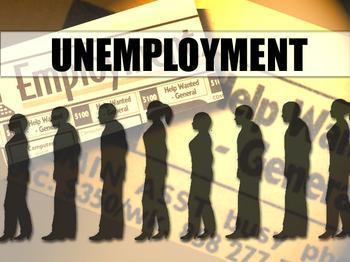
Applications for jobless aid rise sharply
Associated Press
WASHINGTON — The number of people seeking jobless benefits jumped sharply last week, after two straight weeks of declines.
The Labor Department said Thursday that initial claims for unemployment aid rose by 20,000 to a seasonally adjusted 457,000 for the week ending Oct. 30. Wall Street analysts polled by Thomson Reuters had expected a smaller rise.
The increase comes after claims fell in four of the previous five weeks. Those drops had brought claims to their lowest level since July and raised hopes the job market was improving.
Instead, claims have risen back above the 450,000 level they have fluctuated around all year. They will need to drop below 425,000 to signal sustained job gains.
The weekly applications for unemployment benefits are volatile, but are considered a real-time snapshot of the job market. They reflect the pace of layoffs and indicate whether companies are hiring.
The four-week average of claims, a less volatile measure, rose by 2,000 to 456,000.
Claims fell steadily last year, from about 600,000 in June 2009 when the recession ended to about 470,000 at the end of the year. There has been little improvement since then.
Read Full Article
Fresh food that lasts from eFoods Direct (Ad)
Live Superfoods
Print this page
Subscribe to:
Posts (Atom)